
Services
Hip Pain & Hip Adjustment Treatment in Cliffside Park and Hackensack, NJ
Chiropractic & Rehab-Focused Care for Hip Pain, Tightness, Mobility Restrictions & Movement Dysfunction
Hip pain is not always caused by arthritis. In many cases, hip discomfort develops from movement dysfunction, joint restriction, muscular imbalance, altered gait mechanics, or poor load distribution throughout the body.
At Bergen Chiropractic and Sports Rehabilitation Center, we provide comprehensive chiropractic and rehabilitation-focused care for patients experiencing hip pain, hip tightness, reduced mobility, athletic overuse injuries, and movement-related dysfunction in Cliffside Park and Hackensack, NJ.
Our approach focuses on identifying why the hip is becoming overloaded, restricted, or irritated.
Common Causes of Hip Pain
The hip is one of the body’s primary load-bearing joints. When mobility, stability, or movement mechanics become disrupted, stress often transfers into the hip joint, pelvis, low back, knees, or surrounding soft tissue.
Hip pain commonly develops from:
- Joint restriction and altered hip mechanics
- Pelvic imbalance
- Muscular tightness and compensation patterns
- Glute dysfunction and weakness
- Poor gait mechanics
- Repetitive athletic loading
- Sitting-related stiffness and immobility
- Overuse injuries
- Reduced hip mobility
- Sports and gym-related strain
Many patients are surprised to learn their hip pain may actually be connected to dysfunction elsewhere in the kinetic chain.
The Connection Between the Hip, Pelvis & Low Back
The hip does not function independently. Proper movement depends on coordination between the:
- Hip joint
- Pelvis
- Low back
- Core
- Glutes
- Knees
- Ankles
When one area becomes restricted or unstable, the body compensates elsewhere. This can increase stress on surrounding joints and soft tissue, leading to pain, stiffness, reduced performance, and chronic movement dysfunction.
Hip restriction can commonly contribute to:
- Low back pain
- Sciatica-like symptoms
- Knee pain
- Glute tightness
- Reduced squat depth
- Pain while walking or running
- Difficulty standing after sitting
- Limited mobility during exercise
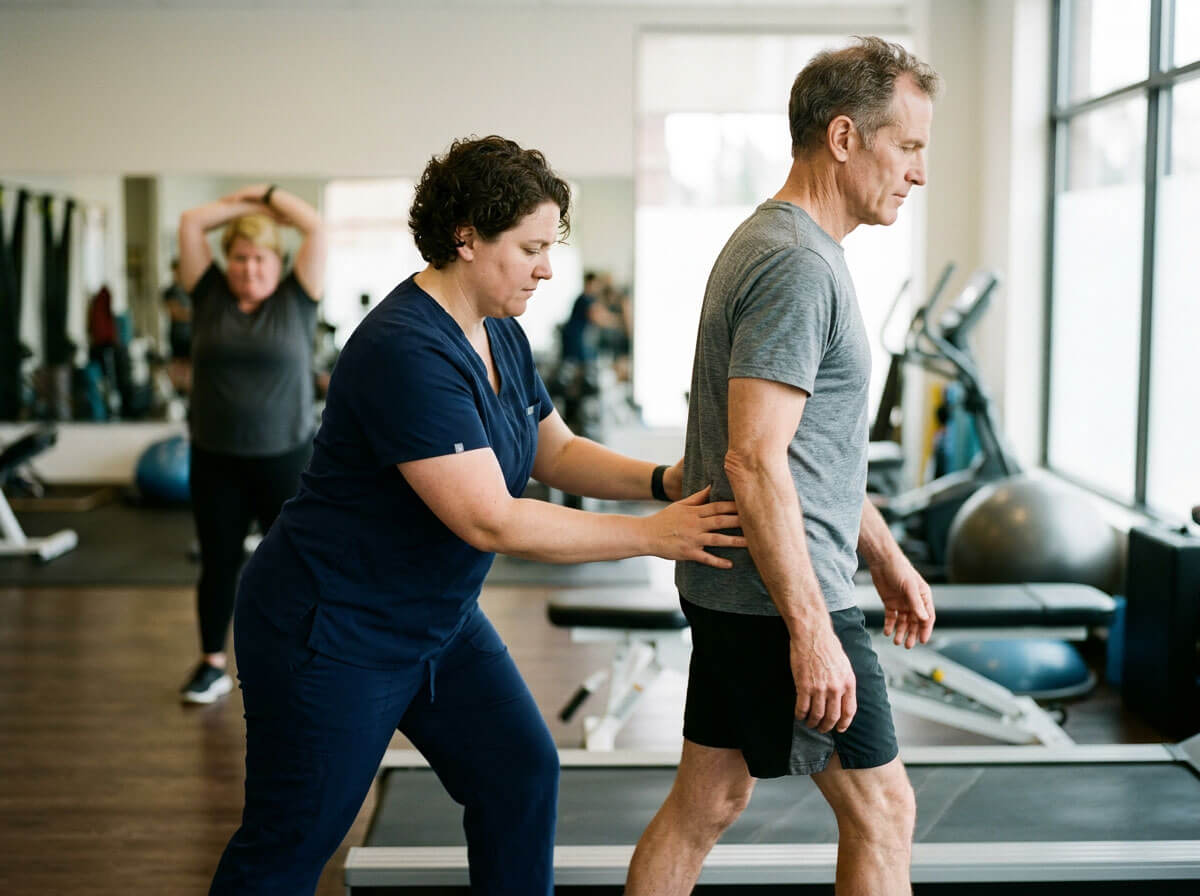
Hip Pain From Sitting, Work & Daily Posture
Extended sitting can place the hips in a shortened, stressed position for hours at a time. Over time, this may contribute to:
- Hip flexor tightness
- Glute inhibition
- Pelvic imbalance
- Reduced hip mobility
- Lower back tension
- Poor movement mechanics
Patients who work at desks or spend long periods driving often develop stiffness, tightness, or discomfort that gradually worsens with activity, exercise, or prolonged sitting.
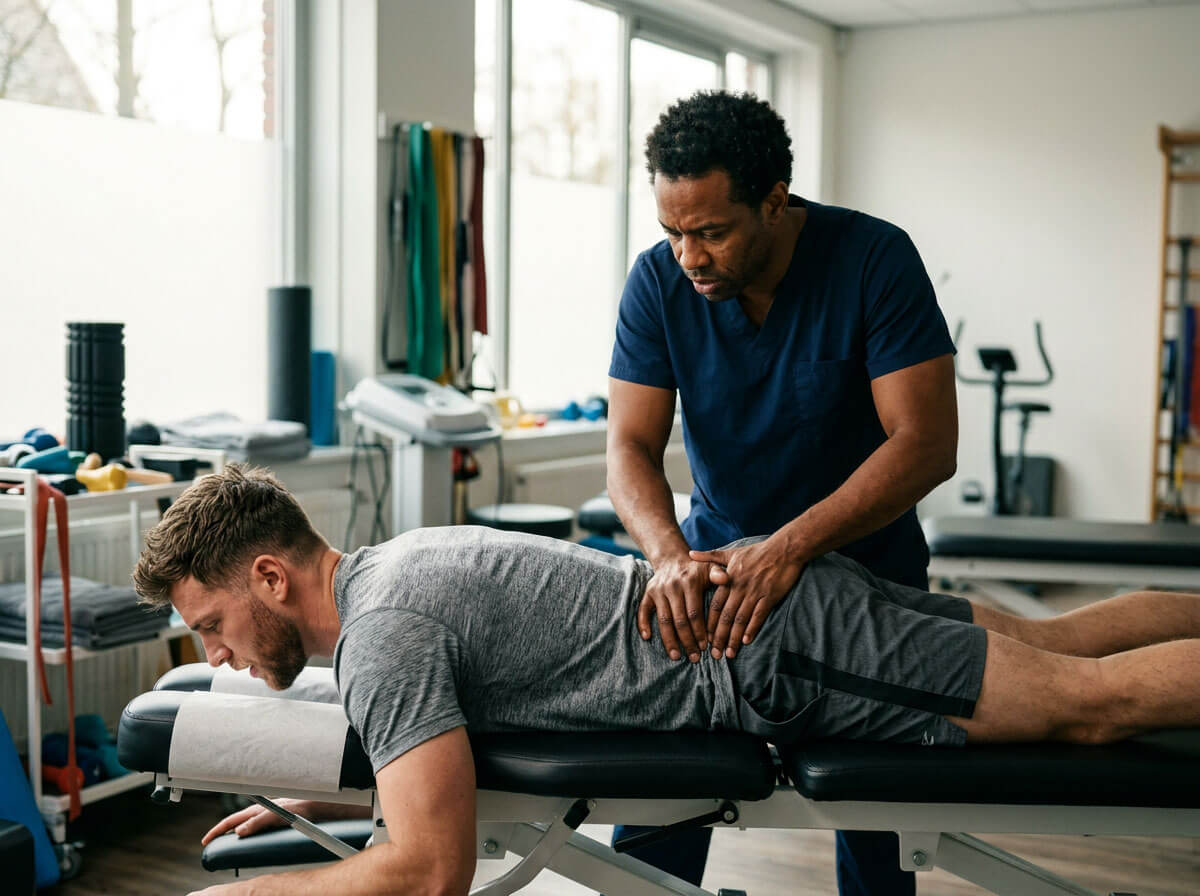
Gym & Athletic Causes of Hip Pain
Hip pain is common among active individuals and athletes, especially when movement mechanics or load distribution become inefficient.
Common contributors include:
- Squatting Mechanics: Poor squat mechanics, restricted hip mobility, pelvic instability, or compensation patterns can overload the hips and low back during training.
- Running & Repetitive Impact: Running places repetitive stress through the hips, pelvis, knees, and surrounding musculature. Limited mobility or muscular imbalance can increase irritation over time.
- Overuse & Training Volume: High training frequency without proper recovery, mobility work, or movement control can contribute to chronic hip tightness and dysfunction.
At Bergen Chiropractic, treatment plans are designed to support both recovery and long-term movement performance.
Comprehensive Hip Pain Treatment
Our treatment approach combines chiropractic care with soft-tissue therapy and rehabilitation-focused strategies to improve movement quality and reduce mechanical stress on the body.
Care may include:
- Hip and pelvic chiropractic adjustments
- Joint mobility restoration
- Soft tissue treatment
- Myofascial work
- Mobility-focused rehabilitation exercises
- Corrective exercise
- Glute activation strategies
- Movement assessment
- Gait and biomechanical evaluation
Rather than focusing only on where pain is felt, we evaluate how the body is moving as a whole.
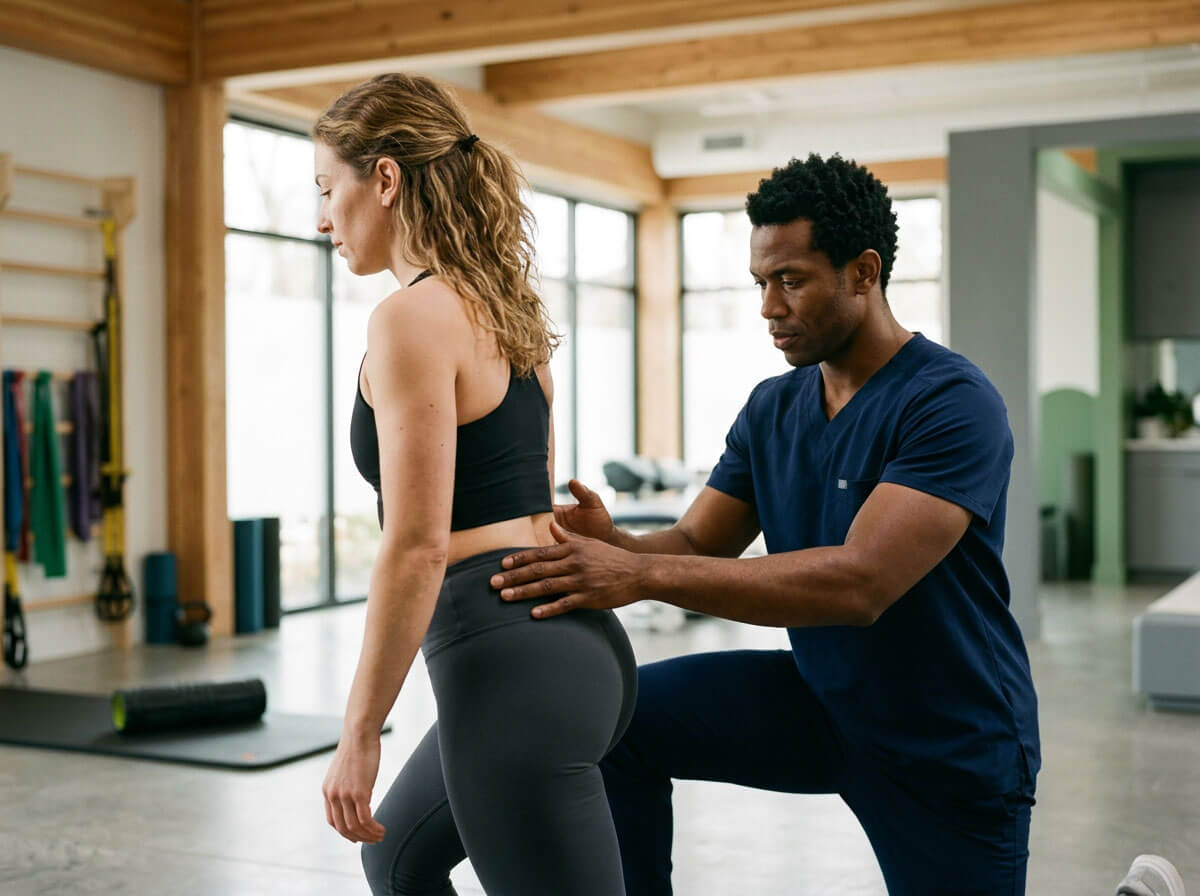
Why Treating Hip Restrictions Matters
When hip mobility becomes limited, the body often compensates through the low back, knees, or surrounding muscles.
Over time, these patterns can increase joint stress and contribute to chronic pain or recurring injuries.
Early treatment may help:
- Improve mobility
- Reduce joint stress
- Restore movement efficiency
- Improve squat and athletic mechanics
- Reduce compensation patterns
- Improve sitting and walking tolerance
- Support long-term recovery and performance
Hip Pain Treatment in Cliffside Park & Hackensack
Bergen Chiropractic and Sports Rehabilitation Center provides evidence-informed chiropractic and rehabilitation care for patients experiencing hip pain, mobility restrictions, athletic injuries, and movement dysfunction throughout Bergen County.
Frequently Asked Questions
Can chiropractic adjustments help hip pain?
Yes. Chiropractic adjustments may help improve hip and pelvic joint mobility, reduce restriction, and improve overall movement mechanics when combined with rehabilitation-focused care.
Is hip pain always arthritis?
No. Many cases of hip pain are related to muscular imbalance, joint restriction, movement dysfunction, soft tissue irritation, or compensation patterns rather than arthritis alone.
Can hip problems cause low back pain or sciatica symptoms?
Yes. Restricted hip mobility and pelvic dysfunction can increase stress on the low back and surrounding nerves, sometimes contributing to sciatica-like symptoms and radiating discomfort.
Why does sitting make my hips tight?
Extended sitting can shorten the hip flexors, reduce glute activation, and alter pelvic positioning, leading to stiffness, tightness, and movement restriction over time.