
Services
Shockwave Therapy in Bergen County, NJ
Advanced Regenerative Treatment for Pain, Injury, and Recovery
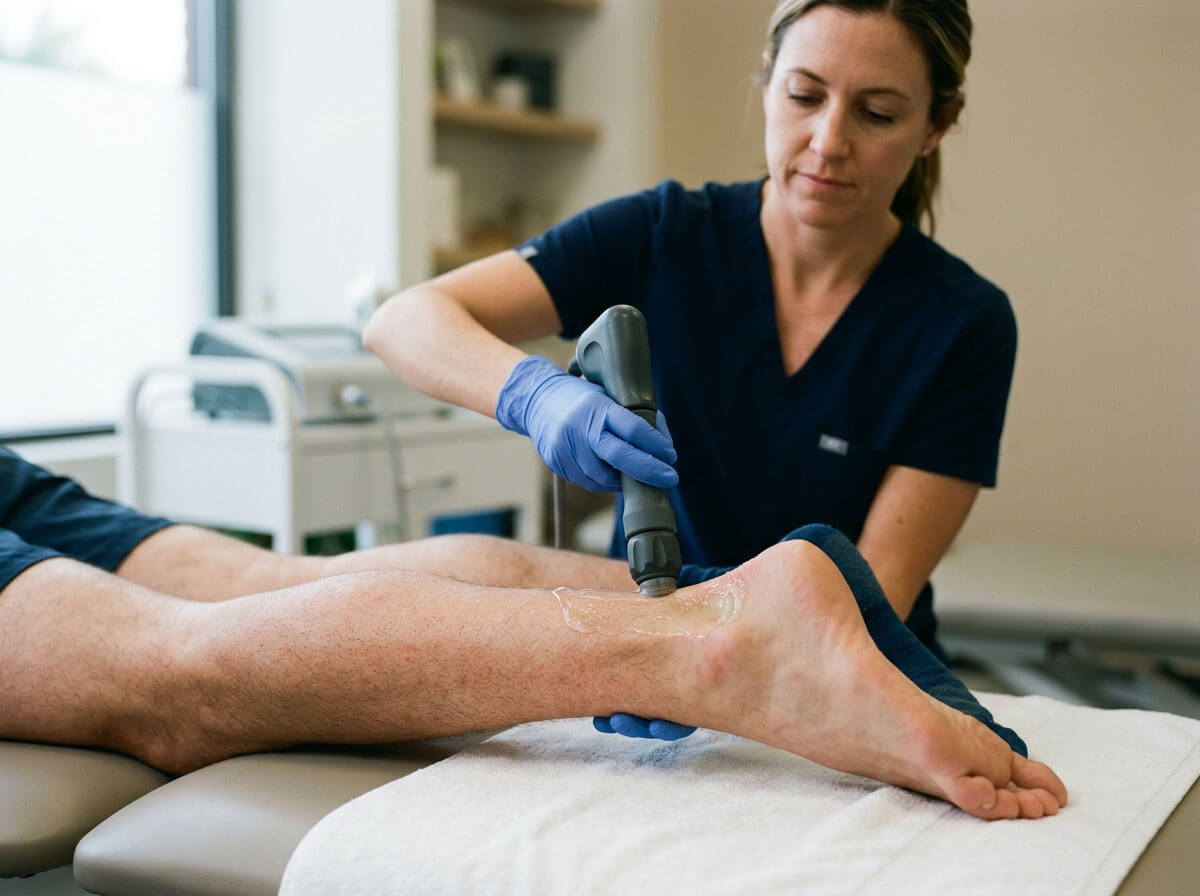
Shockwave therapy is a non-invasive treatment that uses high-energy acoustic waves to stimulate biological changes in injured tissue.
It is primarily used for chronic tendon, ligament, and joint conditions where the body has stopped healing effectively.
At Bergen Chiropractic, we use focused shockwave therapy, which allows us to deliver energy to a specific depth and location within the body rather than treating only the surface.
What Is Shockwave Therapy
Shockwave Therapy processes activate what is known as mechanotransduction, where mechanical energy is converted into a cellular response that promotes healing.
This includes:
- Increased blood flow to damaged areas
- Stimulation of tissue regeneration
- Activation of your body’s own repair mechanisms
- Improved breakdown of chronic scar tissue
Unlike passive treatments, this therapy encourages the body to actively heal from within.
Focused vs Radial Shockwave: Why It Matters
Many clinics use radial pulse wave therapy, which disperses energy across a broad, superficial area. While effective for surface-level conditions, it does not reach deeper structures.
At Bergen Chiropractic, we utilize focused shockwave therapy, which allows us to:
- Target specific injured tissues with precision
- Penetrate deeper structures such as tendons, joints, and labral tissue
- Deliver consistent, clinically validated energy levels
- Treat complex and chronic conditions more effectively
This precision is what allows us to treat the root of the issue rather than just the symptoms.
Why Chronic Injuries Do Not Heal Properly
Many of the conditions we treat are not acute injuries. They are chronic, degenerative problems.
Tendons and ligaments have a limited blood supply. Once they become irritated or overloaded, they often do not heal completely. Instead, they enter a cycle of:
- Low-grade inflammation
- Poor tissue quality
- Recurrent pain with activity
This is why conditions like tendonitis often become tendinosis, where the issue is no longer inflammation but degeneration.
Shockwave therapy is used in these cases because it stimulates a repair response in tissue that is not healing on its own.
Focused vs Radial Shockwave
Radial Shockwave (Radial Pulse)
Uses compressed air to create a pressure wave
Energy disperses outward from the applicator
Primarily affects superficial tissue
Useful for general soft tissue work and scar tissue
Focused Shockwave
Generates a high-energy acoustic wave that converges at a specific depth
Can reach deeper structures such as tendons, joints, and labral tissue
Delivers energy to a defined, targeted area
Supported by a larger body of research for deeper and more complex conditions
We use the focused shockwave approach because it allows us to treat the exact structure involved, rather than applying energy broadly.
How Shockwave Therapy Promotes Healing
When tissue is injured, especially in tendons and ligaments, healing is often delayed due to limited blood supply.
Shockwave therapy helps overcome this by stimulating key biological responses:
- VEGF (vascular endothelial growth factor) to promote new blood vessel formation
- Exosome release, which supports cellular repair and communication
- Activation of local stem cells within the targeted area
- Improved tissue metabolism and repair capacity
The result is a measurable shift from chronic dysfunction to active healing.
Conditions Shockwave Therapy Is Used For
Shockwave therapy is most effective for conditions that are:
- Chronic
- Localised
- Not responding to rest, exercise, or basic treatment
Common Indications
Tendon Conditions
- Tennis elbow
- Golfer’s elbow
- Rotator cuff tendinopathy
- Achilles tendinopathy
- Patellar tendon pain
Foot and Lower Limb
- Plantar fasciitis
- Heel pain
- Calf and Achilles issues
Hip and Shoulder
- Hip tendon pain
- Labral irritation
- Shoulder impingement
Spine and Postural Strain
- Chronic neck and upper back tension
- Mechanical low back pain
Other
- Scar tissue restrictions
- Chronic soft tissue injuries
- Early degenerative joint conditions
What Treatment Feels Like
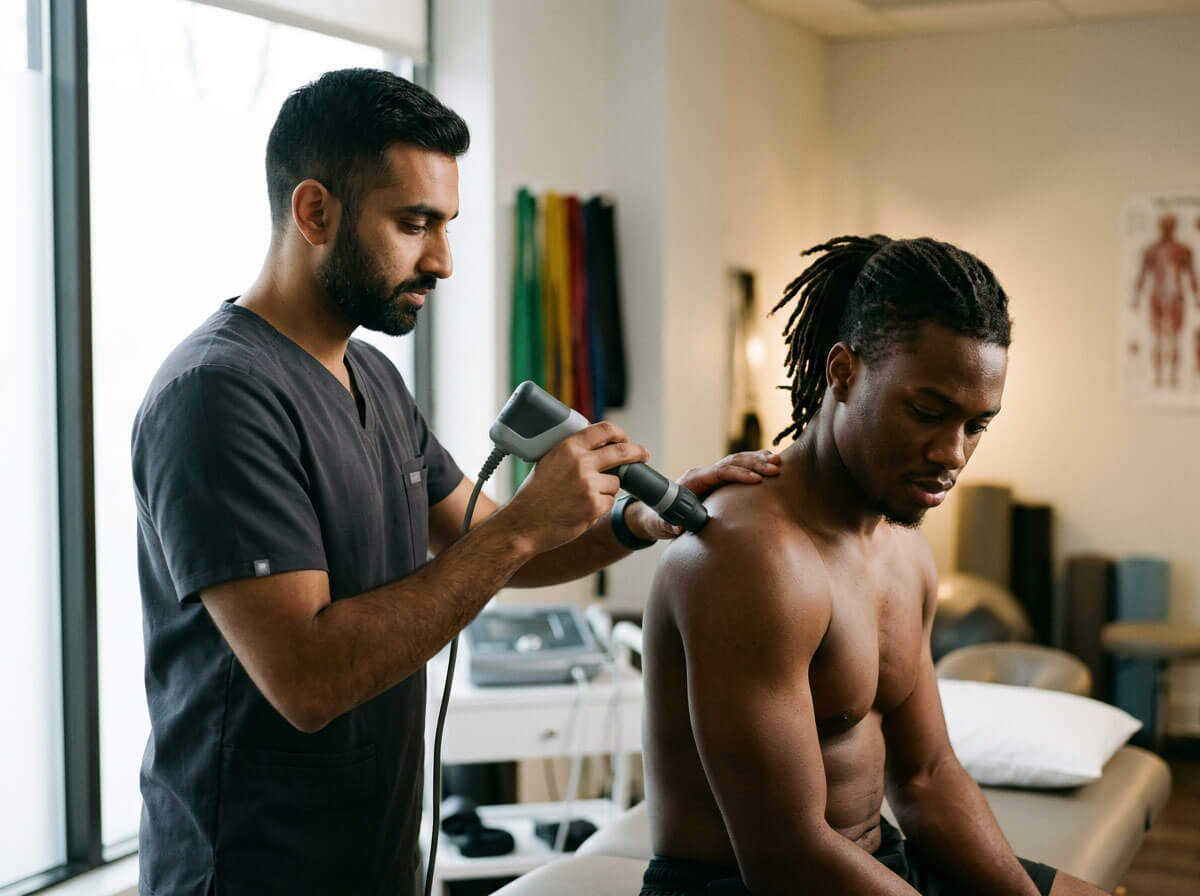
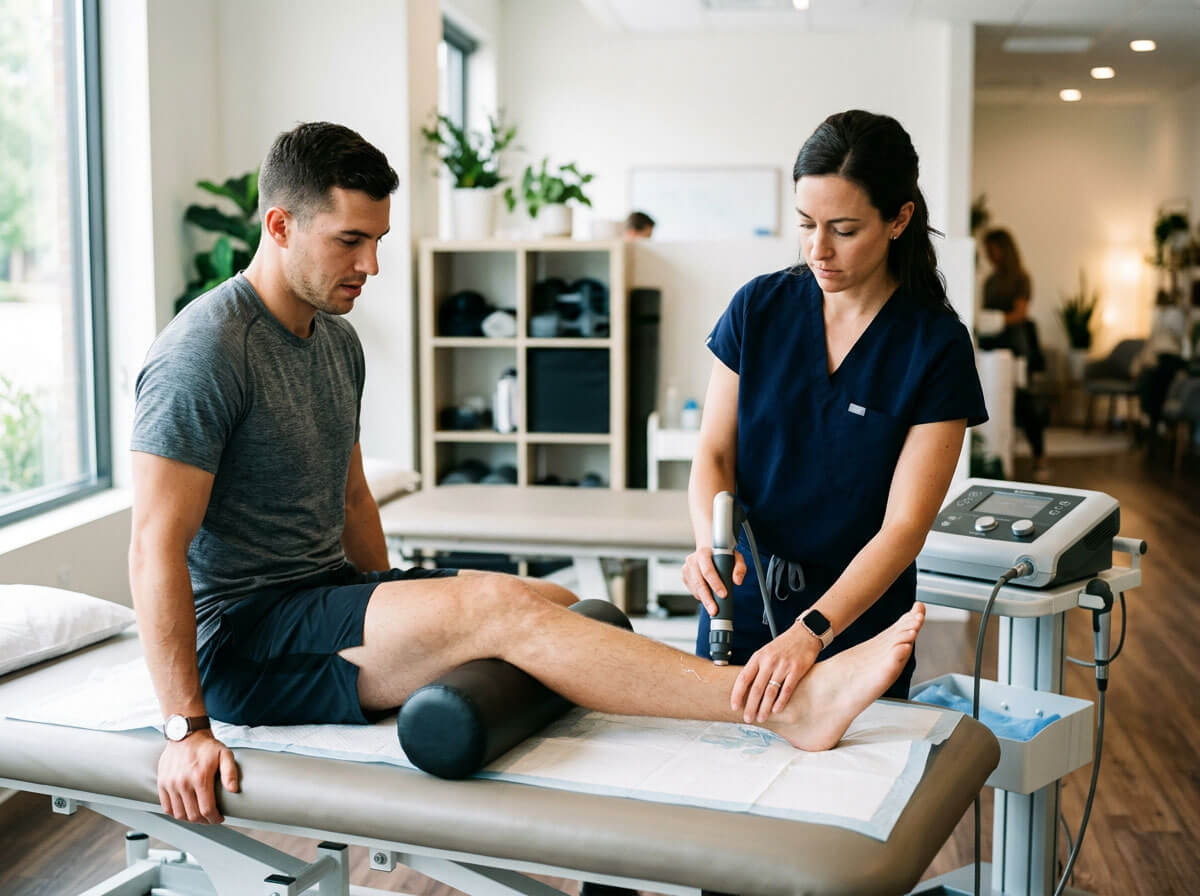
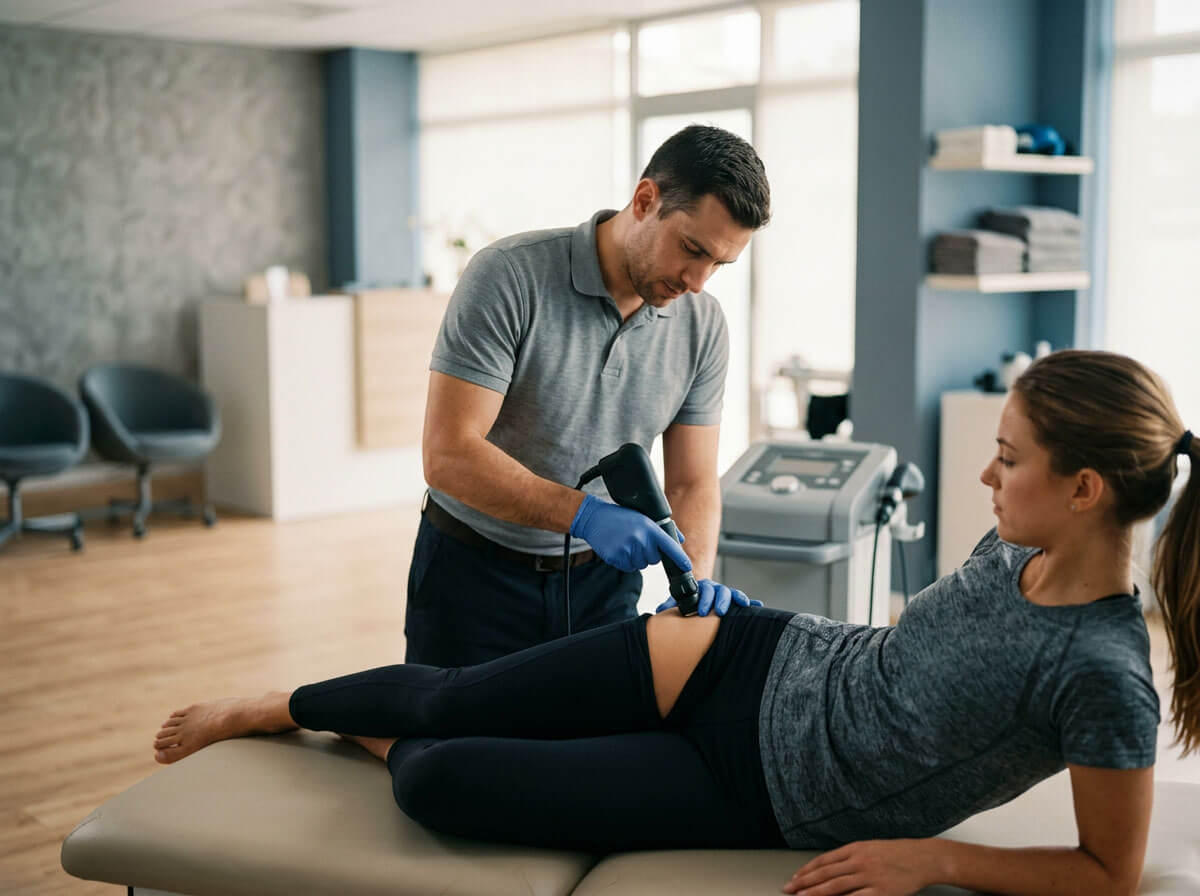
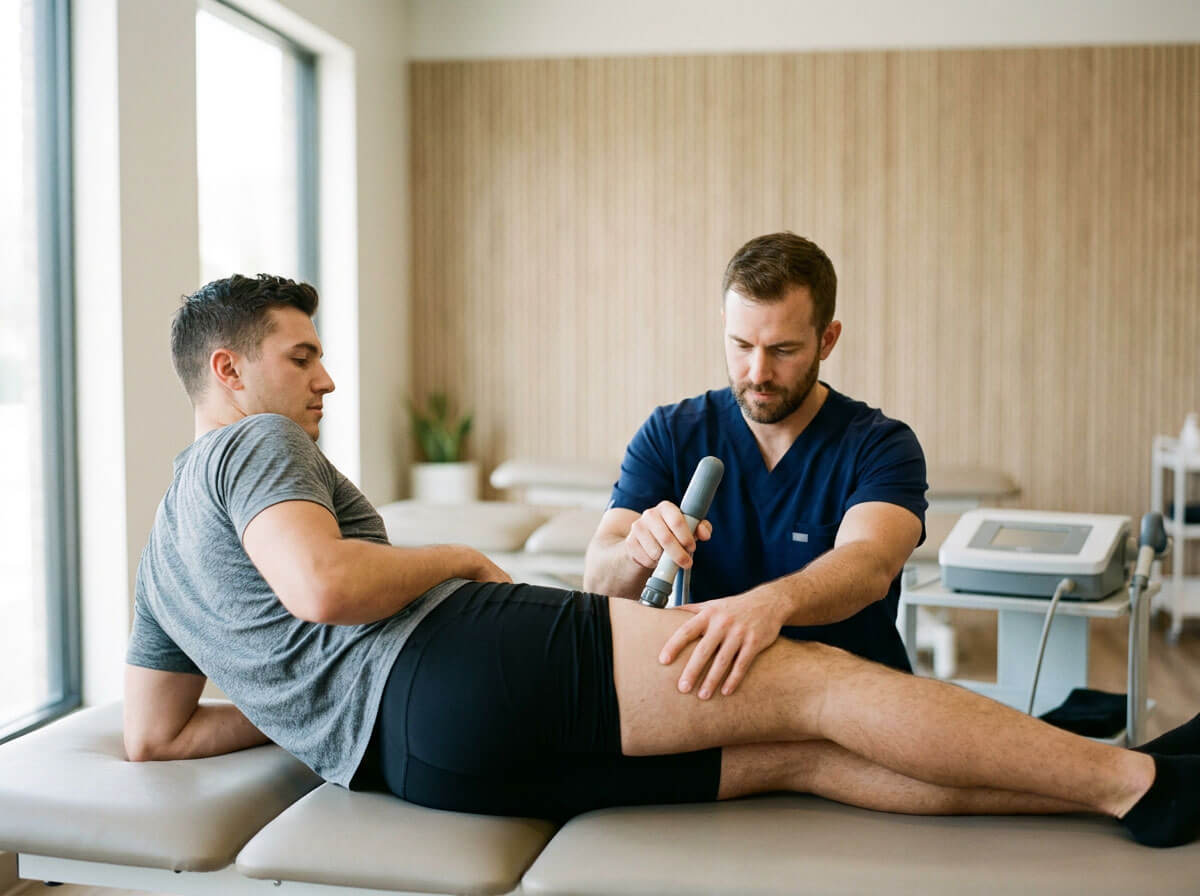
The treatment involves placing an applicator over the target area and delivering a series of pulses.
- Sessions are short, typically a few minutes per area
- The intensity can be adjusted based on the condition and tolerance
- Discomfort is expected, particularly when the correct tissue is being targeted
In many cases, the patient’s feedback helps confirm that the correct structure is being treated.
Shockwave vs Injections and Surgery
Many patients come to us after being told their next step is an injection or surgery.
Shockwave Therapy offers a different path.
Compared to PRP or Steroid Injections
- No needles or invasive procedures
- No risk of adverse inflammatory reactions
- Lower overall cost across a full treatment plan
- Stimulates your body’s own healing rather than introducing external substances
Compared to Surgery
- No recovery time
- No anesthesia
- No disruption to your daily life
- Focus on restoring tissue, not removing or altering it
Our goal is always to help you avoid unnecessary procedures while achieving real, lasting results.
How It Fits Into Your Treatment Plans
Shockwave therapy is not a standalone solution.
It is typically combined with:
- Load management and exercise
- Manual therapy
- Movement correction
The aim is to create the conditions for healing and then support that healing with appropriate loading and rehabilitation.
When Shockwave Therapy Makes Sense
This treatment is most useful when:
- Pain has been present for several weeks or longer
- The issue keeps returning despite rest or treatment
- Imaging shows tendon or soft tissue changes
- Surgery or injections have been suggested, but not yet pursued
Next Steps
If you are dealing with a persistent tendon, joint, or soft tissue issue, shockwave therapy may be appropriate.
A proper assessment is required to determine:
- Whether the condition is suitable
- Which tissue needs to be targeted
- How it should be integrated into your overall treatment plan