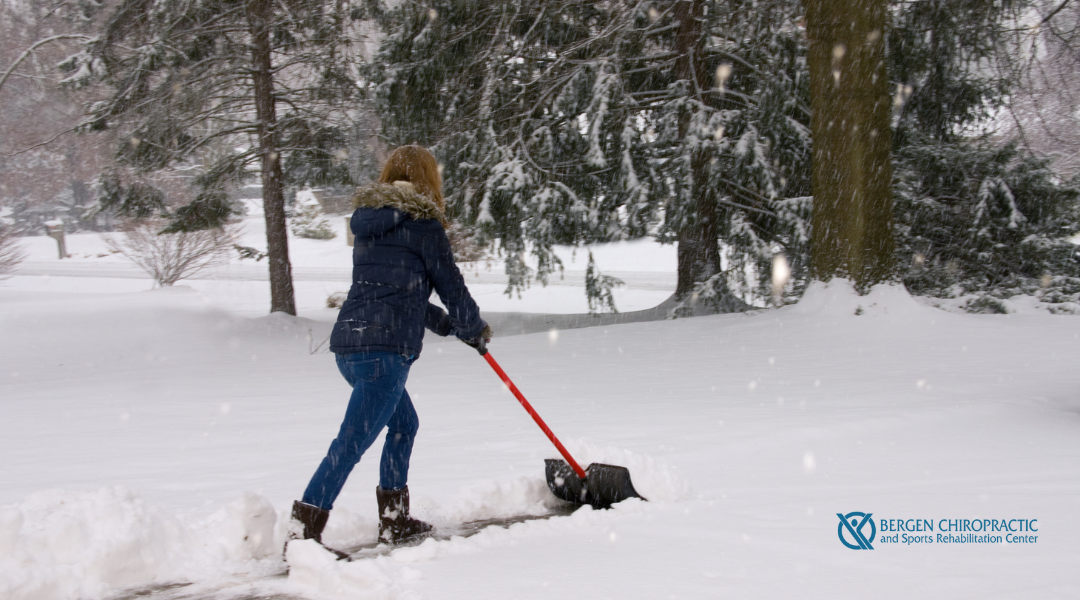
When winter hits Bergen County, snow shoveling becomes a regular part of daily life, but few people realize just how arduous this seasonal chore can be on the spine.
Even the fittest Bergen County resident can end up with back pain, muscle strain, or a sudden flare-up of an existing spinal issue.
Our Bergen Chiropractic team helps patients strengthen, protect, and prepare their bodies for winter activities, especially the intense, repetitive motions of shoveling.
TLDR: Protect Your Spine During Snow Shoveling Season
- Snow shoveling places intense strain on the spine due to forward bending, twisting, heavy loads, and cold-tightened muscles—all of which increase the risk of winter injuries.
- Common seasonal injuries include lower-back strains, herniated discs, sciatica flare-ups, neck tightness, mid-back spasms, and shoulder or rib dysfunction from repetitive winter chores.
- Poor mechanics during lifting, pushing, and throwing snow dramatically increase spinal stress, especially when combined with slippery surfaces and uneven weight distribution.
- Chiropractic care supports safe winter movement by improving alignment, restoring joint mobility, enhancing core stability, and preventing overuse injuries from snow removal.
- Preparing early with adjustments, using proper technique, warming up, and stretching after shoveling help Bergen County residents stay pain-free and protect their spines all winter long.
Spinal Stressors of Winter Chores
Winter chores may look simple on the surface, but they place significant strain on the spine, especially when performed repeatedly or with poor mechanics. Tasks like shoveling, scraping ice, hauling salt bags, pushing heavy snow blowers, and even bending to put on winter boots all involve forward flexion of the spine, rotation, and uneven weight distribution.
Cold temperatures tighten muscles and reduce blood flow, making your back stiffer and more vulnerable to injury. Add slippery driveways, icy sidewalks, and compromised balance, and it’s no surprise that winter months bring a sharp rise in back and neck pain.
Common Winter Injuries Bergen County Residents Experience
The most common winter-related spinal issues include:
- Acute lower back strains from lifting heavy, wet snow or twisting while shoveling
- Herniated or bulging discs, often triggered by bending forward repeatedly
- Sciatica flare-ups due to compressed or irritated spinal nerves
- Neck and upper-back tightness from scraping car windshields or carrying snow-removal equipment
- Mid-back spasms caused by sudden slips, falls, or loss of footing
- Shoulder and rib dysfunction, which often pair with spinal misalignment after strenuous winter activity
These injuries can sideline even the most active residents and often worsen if ignored. Early chiropractic intervention helps restore mobility, calm inflammation, and prevent small issues from becoming long-term problems.
Shoveling Snow Is Harder on the Back Than You Think
Shoveling snow is a biomechanically demanding activity. Wet snow can weigh 20 pounds per scoop.
Here’s why shoveling is especially tough on the spine:
- Forward bending loads the lumbar discs, increasing pressure by up to 150%
- Twisting while lifting places rotational stress on spinal joints and soft tissues
- Cold, tight muscles fire less efficiently, leading to compensation and imbalance
- Repetitive motions compound stress, creating fatigue and reducing stability
- One-sided shoveling (dominant hand control) creates asymmetrical strain that can pull the pelvis and spine out of alignment
Even those who are physically fit, runners, lifters, weekend athletes, can injure themselves if they don’t approach snow shoveling with proper mechanics and spinal readiness.
With proactive chiropractic care, mobility training, and core and posterior chain strengthening, Bergen County residents can dramatically reduce their risk of mid-season injuries and recover faster when snowstorms hit.
Posture Techniques to Protect Your Back While Shoveling
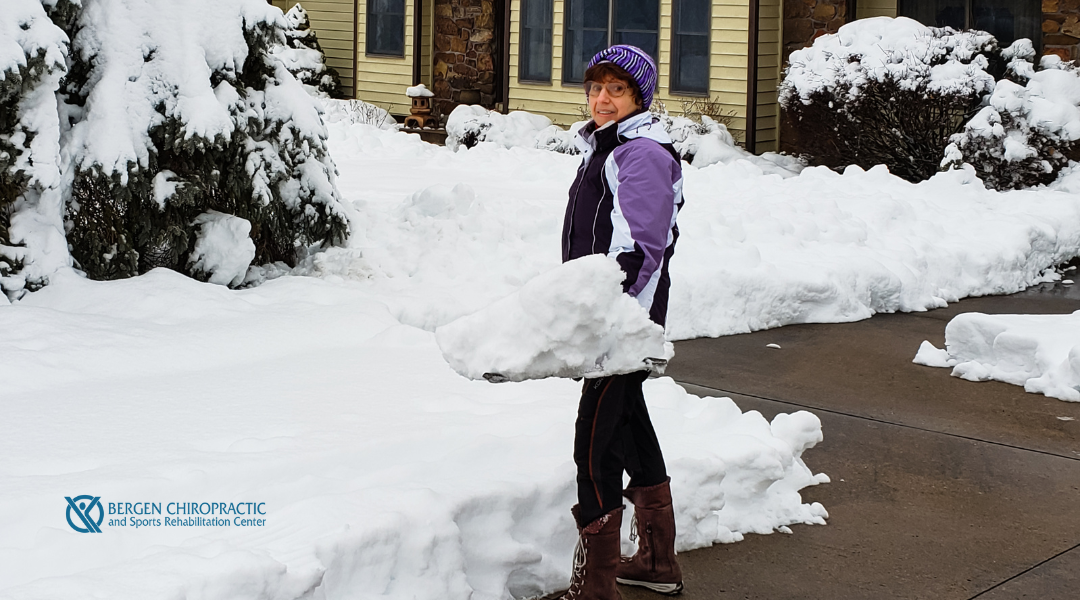
- Keep your spine neutral: avoid rounding your back. A straight, aligned spine distributes load evenly.
- Hinge at the hips, not the waist: use your glutes and hamstrings to power the movement rather than flexing your lower back.
- Bend your knees generously: a slight squat helps absorb the weight of heavy snow without straining the lumbar spine.
- Engage your core before every lift: bracing acts like internal support for your vertebrae.
- Keep the shovel close to your body: the farther the load is from your center, the more torque your spine absorbs.
- Switch sides frequently: alternate hands every few minutes to avoid one-sided overuse and pelvic rotation.
The Correct Way to Lift, Push, and Throw Snow
How to Lift Snow Safely
- Lift with your legs, not your back.
- Keep the load small, especially with wet or heavy snow.
- Maintain a straight spine, and avoid sudden jerking movements.
- Hold the shovel with one hand close to the blade and the other near the end of the handle for optimal leverage.
How to Push Snow the Right Way
- Use your body weight to guide the shovel rather than relying on your arms and back.
- Walk the snow forward instead of reaching or overstretching.
- Keep steps short and steady for better traction on icy surfaces.
How to Throw Snow Without Hurting Yourself
- Do not twist your torso when tossing snow.
- Instead, pivot your whole body by moving your feet.
- Keep throws short and low—overhead tossing is a fast track to lower-back strain.
- Always face the direction you’re “throwing” to minimize torquing forces on the spine.
Movements to Avoid if You Have Existing Back Pain
- Twisting while lifting: rotation + flexion is the #1 cause of winter disc injuries.
- Deep forward bending: especially when trying to scoop heavy, wet snow.
- Overreaching: stepping forward keeps the spine aligned and reduces strain.
- Heavy loads: lighten the shovel and take more trips.
- Fast, repetitive movements: speed increases risk; slow, controlled motion protects the spine.
- Shoveling first thing in the morning: discs are more hydrated and vulnerable after waking. Warm up first or delay if possible.

Chiropractic Adjustments to Support Winter Spinal Health
Regular adjustments help maintain mobility, reduce stiffness, and improve the way the nervous system communicates with the rest of the body. This keeps your spine resilient at a time when most people experience increased tightness, soreness, and reduced range of motion.
Proper Spinal Alignment Prevents Snow-Shoveling Injuries
Good alignment is essential for avoiding snow-shoveling injuries because a misaligned spine works much harder under load. When vertebrae are slightly shifted, or joints are not moving the way they should, the body compensates by overusing certain muscles and underusing others. This imbalance increases the risk of strains, spasms, and disc irritation when you bend, lift, and twist through heavy snow.
Proper alignment encourages the spine and surrounding muscles to share the work evenly, which significantly reduces stress during repetitive winter motions. A spine that moves well is less likely to buckle under pressure and more likely to protect itself during demanding chores.
When to Schedule an Adjustment
The best time to schedule a winter adjustment is before the first serious snowfall arrives. Preparing early ensures your spine is mobile, balanced, and ready for heavy activity. If you already experience lower back tension, stiffness when waking up, or discomfort after raking leaves, it’s wise to come in sooner rather than later.
During the winter season, an adjustment becomes even more important after a large snowstorm, especially if you notice lingering soreness once you finish shoveling. Pain that lasts more than a day, difficulty bending forward, or tightness that radiates into the hips or legs signals that your spine may be overloaded and in need of support.
Additional Tips for Staying Pain-Free All Winter
Keeping your core strong is one of the most effective ways to support your spine during winter chores, because strong abdominal and back muscles act like a natural brace. Hydration is equally important during cold weather, even though you may not feel as thirsty.
Proper hydration keeps muscles supple and reduces the likelihood of cramps and spasms. Taking short breaks while shoveling, avoiding long stretches of intense work, and listening to early signs of fatigue all help prevent issues before they develop.
Stretching After Shoveling
The body cools quickly in winter, and tight muscles can seize up within minutes of finishing a physically demanding chore like shoveling. Stretching immediately after you come inside helps prevent stiffness from setting in.
Slow forward folds, gentle knee-to-chest movements, hip flexor stretches, and mild spinal rotations restore length to the muscles that worked the hardest. These stretches improve circulation, encourage recovery, and reduce the delayed soreness that often shows up the next morning.

Bergen Chiropractic Helps Prevent Winter Back Pain!
The chiropractic team at Bergen Chiropractic and Sports Rehabilitation Center adheres to the highest medical standards to provide superior chiropractic care. Our mission is to deliver unparalleled patient care in a comfortable and healing environment.
Access our contact form or call us at (201) 357-6539 to learn more about our chiropractic care services! Our offices at 532 Anderson Avenue, Cliffside Park, NJ 07010, and 62 Summit Ave, Hackensack, NJ 07601, are ready to welcome you as we proudly serve the areas of New York, New Jersey, Philadelphia, PA, and Baltimore, MD. Also, access our blog, Facebook, and Instagram pages for more information on chiropractic care!