Pain between the shoulder blades usually comes from the muscles, joints, or posture of the upper back.
The most common causes are muscle strain, long hours at a desk, and stiff thoracic spine joints. Less often, the pain is referred from the neck or from organs like the heart, lungs, or gallbladder.
It may feel like a dull ache after a long workday, tightness when you move your shoulders, or a sharp twinge when you twist or breathe deeply.
Below are seven possible causes of pain between the shoulder blades, the clues that help tell them apart, and the signs that mean you should get checked right away.
7 Common Causes of Pain Between the Shoulder Blades
How the pain feels and what sets it off are your best clues to where it’s coming from.
1. Muscle Strain or Overuse
The muscles around your shoulder blades support and move your upper body all day. Heavy lifting, repetitive movements, carrying a heavy bag, or a sudden jump in activity can strain them.
Clue: Soreness or tightness that started after a specific activity and feels worse when you use those muscles.
2. Poor Posture and Prolonged Sitting
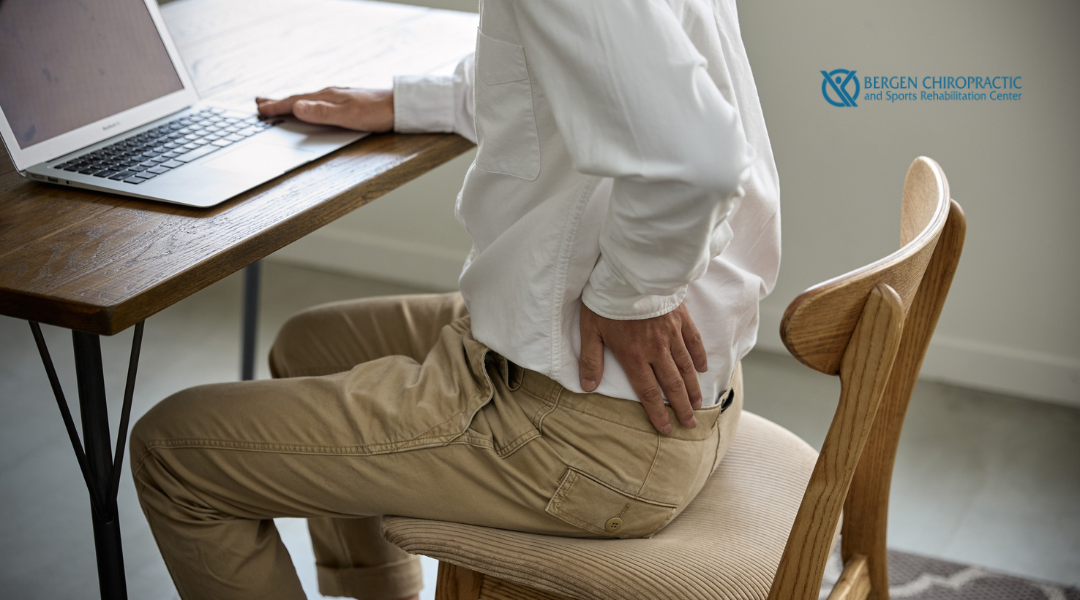
Hours at a computer or looking down at your phone keep the neck and upper back muscles working without a break. Over time, that leads to stiffness and fatigue between the shoulder blades, often alongside forward head posture.
Clue: An ache that builds through the workday and eases when you move or change position.
3. Thoracic Spine Joint Dysfunction
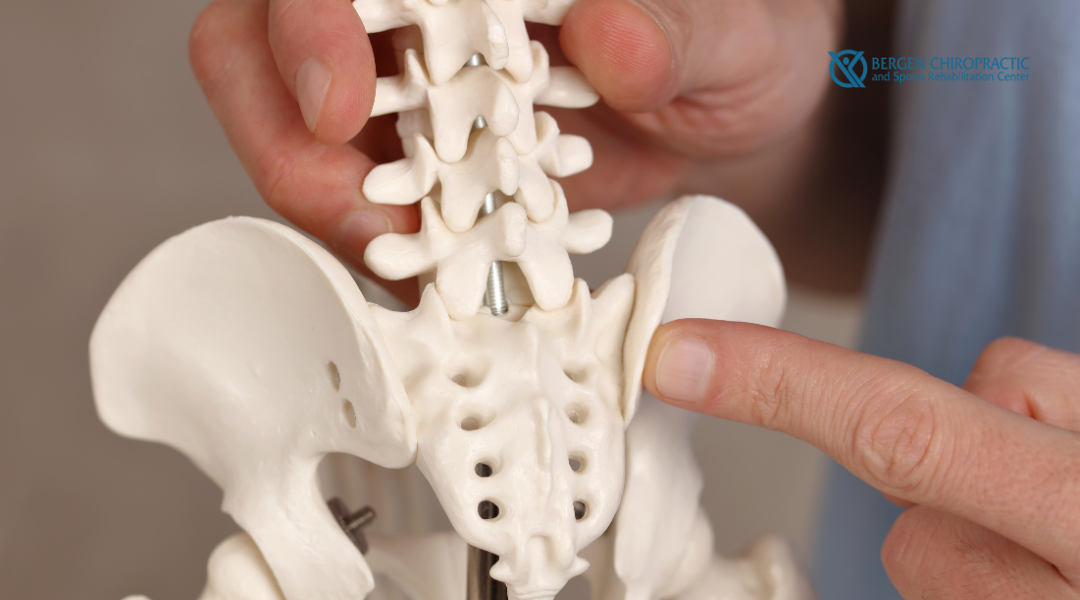
The thoracic spine is the middle and upper part of your back. When its joints get stiff or irritated, you may feel localized pain between or around the shoulder blades.
Clue: Pain that sharpens when you twist, reach, bend, or take a deep breath.
4. Muscle Knots and Trigger Points
Muscle knots, or trigger points, are tight, sensitive spots inside a muscle. They often develop from repetitive activity, holding one position too long, or overuse.
Clue: A tender spot you can press on that may send pain into nearby areas.
5. Neck Problems and Referred Pain
Pain between the shoulder blades doesn’t always start there. Irritated joints, muscles, or nerves in the neck can cause referred pain, which means you feel it around the shoulder blade even though the source is higher up. The same neck problems can also trigger cervicogenic headaches.
Clue: Neck stiffness, pain that changes when you move your head, or symptoms running into the shoulder or arm.
6. Sports or Exercise-Related Injuries
Weightlifting, golf, tennis, swimming, and throwing sports all put repeated stress on the upper back and shoulders. Poor technique, sudden movements, or ramping up training too fast can irritate the muscles and joints around the shoulder blades.
Clue: Pain tied to a specific sport, lift, or recent change in your training.
7. Rib and Upper Back Mobility Issues
Your ribs attach to the thoracic spine and move with every breath and upper-body motion. If the joints between them are restricted or irritated, pain can show up near the shoulder blades.
Clue: Pain with rotation, reaching, or deep breathing, sometimes wrapping toward the side of the chest.

When Is Pain Between the Shoulder Blades a Warning Sign?
Most upper back pain is musculoskeletal, but some causes are emergencies. Call 911 if the pain comes with:
- Chest pain or pressure, shortness of breath, sweating, or nausea.
- A sudden, severe, or “tearing” pain in the upper back.
- Pain spreading to the jaw, arm, or neck.
- Numbness, tingling, or weakness in the arms or legs.
Also get evaluated promptly if you have pain after a fall or injury, pain with fever, pain that flares after fatty meals (a possible gallbladder issue), or pain that doesn’t change at all with movement or position.
Can Chiropractic Care Help With Pain Between the Shoulder Blades?
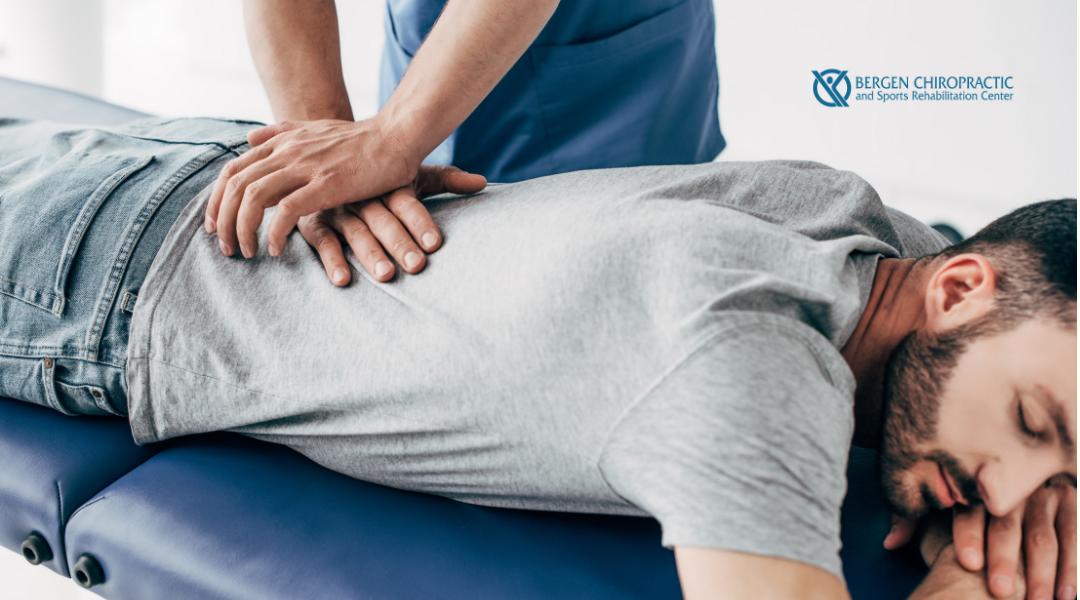
Yes. When the pain comes from joint stiffness, muscle tension, or movement restrictions, chiropractic care can help restore mobility and reduce irritation.
At Bergen Chiropractic and Sports Rehabilitation Center, treatment is matched to what’s driving your symptoms and may include:
- Chiropractic adjustments: Restore movement in restricted areas like the thoracic spine and neck.
- Soft tissue techniques: Hands-on soft tissue therapy, including Active Release Technique (ART), Graston Technique, and FAKTR, targets tight or irritated muscles around the upper back and shoulders.
- Mobility and rehabilitation exercises: Build mobility, strength, and control in the areas behind your symptoms.
- Posture and movement recommendations: Small changes to your desk setup, training, or daily habits can reduce repeated strain on the upper back.
The goal is to find why the area between your shoulder blades hurts, fix what’s driving it, and get you moving comfortably again.

Frequently Asked Questions
Why does it hurt between my shoulder blades when I breathe?
Breathing expands the rib cage and moves the ribs, thoracic spine, and surrounding muscles. If a muscle is strained or a rib or upper back joint is irritated, that movement can bring on the pain. Pain with breathing can also have heart or lung causes, so new, severe, or unexplained pain should be evaluated.
Why does my pain get worse after sitting at a desk?
Sitting holds your neck, shoulders, and upper back in one position for hours, which fatigues and stiffens the muscles. Leaning forward or looking down at a screen makes it worse. Regular movement breaks and a better workstation setup can make a real difference.
Can neck problems cause pain between the shoulder blades?
Yes. Irritated muscles, joints, or nerves in the neck can cause referred pain between the shoulder blades, often with neck stiffness, pain on certain head movements, or symptoms into the shoulder or arm. Learn more about our neck and shoulder pain treatment.
How long does muscular pain between the shoulder blades usually last?
A mild muscle strain often starts improving within a few days and keeps recovering over several weeks. Timing depends on how severe the strain is, what caused it, and whether the area keeps getting aggravated. Pain that lingers, keeps coming back, or gets worse should be evaluated.

Get Help With Persistent Upper Back Pain with Bergen Chiropractic!
The chiropractic team at Bergen Chiropractic and Sports Rehabilitation Center adheres to the highest medical standards to provide superior chiropractic care.
Our mission is to deliver unparalleled patient care in a comfortable and healing environment.
Access our contact form or call us at (201) 945-4075 to learn more about our chiropractic care services! Our offices at 532 Anderson Avenue, Cliffside Park, NJ 07010, and 62 Summit Ave, Hackensack, NJ 07601, are ready to welcome you as we proudly serve the areas of New York, New Jersey, Philadelphia, PA, and Baltimore, MD.
Also, access our blog, Facebook, and Instagram pages for more information on chiropractic care!