The drop in temperature brings challenges that even experienced runners can’t ignore. Tight muscles, stiff joints, reduced circulation, slippery terrain, and altered biomechanics all increase the risk of injury once the winter chill sets in.
Many runners feel strong in the fall, only to struggle with knee pain, hip tightness, or lower-back strain as soon as the temperature dips.
Chiropractic care plays a powerful role in helping runners maintain proper alignment, improve flexibility, and protect their bodies from the unique stresses of winter endurance training.
By supporting joint mobility, optimizing muscle balance, and improving movement patterns, chiropractic adjustments help you run comfortably, efficiently, and safely, even on the coldest Bergen County mornings.
TLDR: Chiropractic Care Keeps Runners Safe in Cold Weather
- Cold weather tightens muscles and stiffens joints, increasing the risk of strains, knee pain, and lower-back issues for winter runners.
- Reduced circulation and altered biomechanics make it harder to maintain smooth, efficient form during cold-weather runs.
- Chiropractors help runners stay injury-free by improving spinal alignment, joint mobility, and full-body movement patterns.
- Adjustments boost circulation, enhance range of motion, and support better shock absorption—key for running safely on slippery or uneven winter terrain.
- Consistent chiropractic care paired with winter-specific warm-ups helps runners move comfortably, prevent overuse injuries, and maintain strong performance all season.
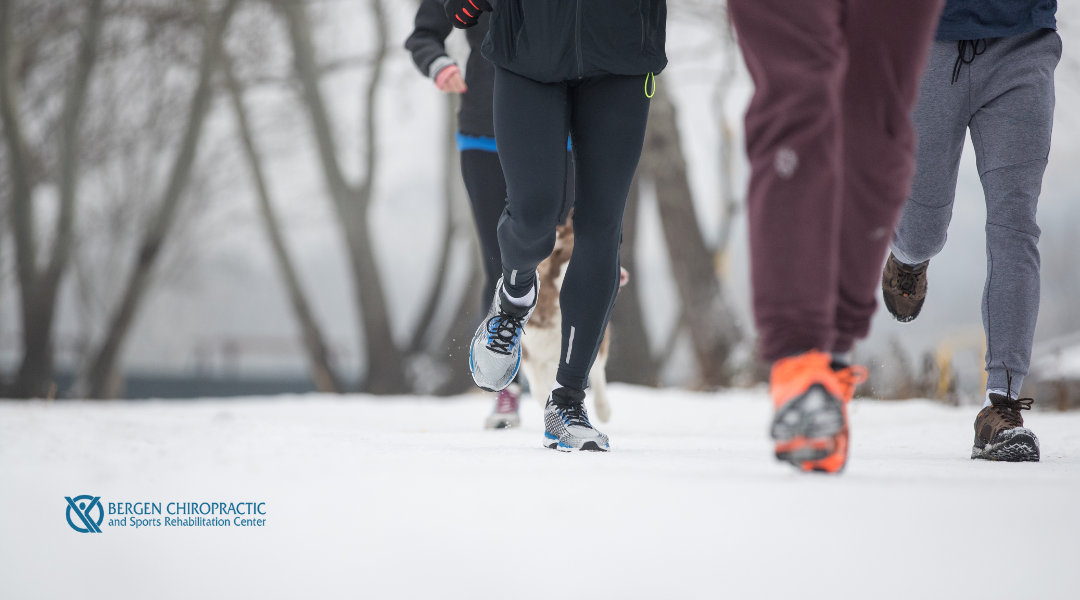
Why Cold Weather Increases Running Injury Risk
As temperatures drop, muscles and connective tissues naturally tighten, reducing flexibility and making it harder to achieve a full, smooth stride. Joints can feel stiffer, and it often takes longer for your body to warm up, so you may start your run with restricted mobility without realizing it.
On top of that, winter surfaces are more unpredictable. Wet leaves, packed snow, black ice, and uneven sidewalks in Bergen County all require quicker reactions and more stabilizing effort from your ankles, knees, hips, and spine. The combination of cold, tight tissues and unstable footing increases the risk of pulled muscles, joint irritation, and overuse injuries.
Many runners also change their form unconsciously in winter, shortening their stride, leaning forward, or tensing their shoulders to brace against the cold, which can create additional strain throughout the kinetic chain.
How Low Temperatures Affect Muscles, Joints, and Biomechanics
When the temperature drops, blood vessels constrict and circulation naturally shifts to protect vital organs. As a result, muscles receive less warm blood at the start of a run, which slows their ability to contract and relax efficiently. Tight muscles are more likely to tear or strain under stress, especially when you push off, sprint, or run hills.
Joints can feel stiffer because the synovial fluid that lubricates them becomes thicker in cold conditions, which is why knees, hips, and ankles often feel creaky during the first few minutes of a winter run.
All of this alters biomechanics. Runners might overstride to maintain pace, land harder on their heels, or lose smooth hip extension because their hip flexors and glutes are not fully warmed up. Over time, these subtle shifts in movement can place extra pressure on the lower back, pelvis, and knees.
Without proper preparation and care, winter running can slowly erode efficient form and set the stage for nagging injuries.
Common Winter Running Injuries in Bergen County
Our Chiropractors see a familiar pattern of injuries once the winter training season begins. Many runners complain of tight, aching lower backs that flare after cold morning runs, often related to restricted hip movement and increased strain on the lumbar spine.
Knee pain is another frequent issue, particularly around the front of the knee, as runners alter their stride to navigate slippery surfaces or hills.
Ankle sprains and strained calf muscles become more common when footing is uncertain or when runners push off too aggressively without adequate warm-up.
Hamstring pulls and IT band irritation can also show up more often in the cold, especially in runners who do not adjust their warm-up routine for winter conditions.
Even the upper body is not immune, because tense shoulders and a forward head posture in cold air can lead to neck and mid-back discomfort. These injuries are not random. They are usually the result of tight tissues, altered mechanics, and a spine that is working harder than it should to compensate.
Chiropractic Care Supports Safe Winter Running
Chiropractic care is a powerful tool for runners who want to stay consistent and injury-free throughout the cold season. By focusing on spinal alignment, joint mobility, and neuromuscular balance, chiropractic adjustments help the body better handle the stress of winter training.
A well-aligned body distributes impact forces more evenly through the hips, knees, and ankles instead of overloading one area. Chiropractic care can also complement the work you are already doing with strength training, stretching, and warm-ups.
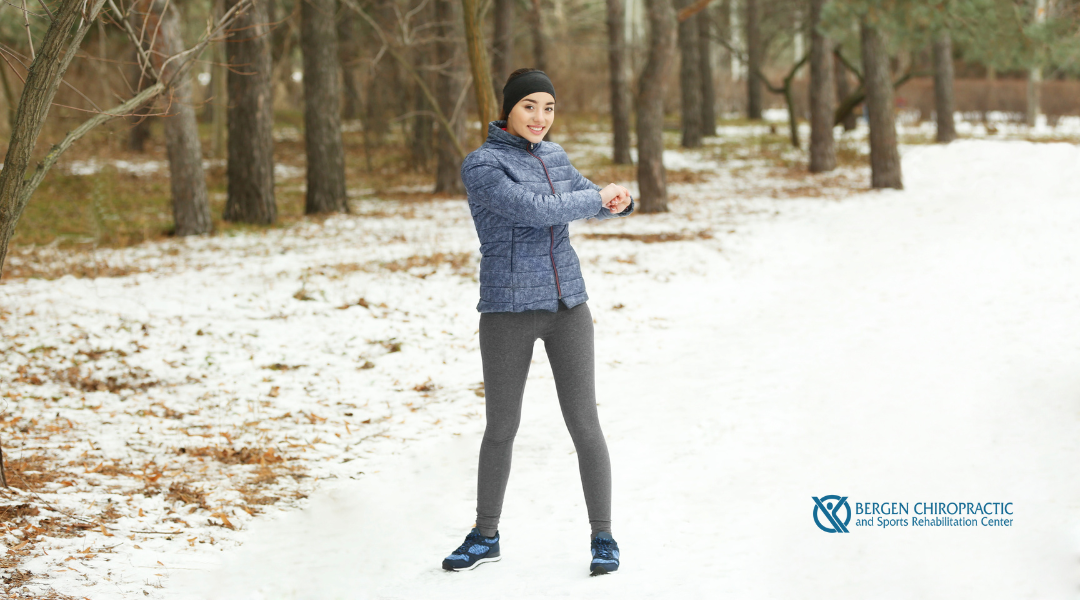
Improving Alignment for Better Form and Reduced Strain
Efficient running form starts with a stable, well-aligned spine and pelvis. When the spine is out of alignment, it can subtly change the position of the hips, knees, and feet, which affects every stride you take.
For example, a rotated pelvis can lead to one leg working harder than the other, increasing the risk of knee pain or hip irritation on that side. Misalignment in the mid back can change your arm swing and upper body posture, which affects balance and breathing.
Through targeted chiropractic adjustments, these misalignments are corrected so your body can move the way it is designed to move. This allows your feet to land more evenly, your hips to extend properly, and your core to engage more effectively.
Better alignment means less strain on any single joint or muscle group, which is especially important when you are running in cold conditions where tissues are more vulnerable to stress.
Enhancing Joint Mobility and Range of Motion
Chiropractic adjustments help restore normal motion to these restricted joints, allowing the entire kinetic chain to work together more efficiently.
For runners, this can feel like easier hip rotation, better ankle flexion, and improved shock absorption with each step. Increased mobility allows for a more natural stride, which reduces the need for the lower back or knees to take on extra work.
With better range of motion, warm ups become more effective, and your muscles can activate more fully, helping you feel lighter and more agile on cold weather runs.
Boosting Circulation and Warmth Through Chiropractic Adjustments
Chiropractic adjustments help reduce areas of tension that can restrict circulation and slow healing. As mobility increases, muscles receive more oxygen and nutrients, which support warmth, endurance, and recovery.
Many runners notice that after an adjustment, they feel looser, warmer, and more ready to move, even in colder weather. Improved circulation also helps flush out metabolic waste produced during hard runs, which can reduce post-run soreness.

Chiropractor-Recommended Warm-Up Techniques for Cold Weather
A proper winter warm-up should gradually increase your heart rate, elevate your body temperature, and encourage full-body movement before your feet even hit the pavement. Starting with light marching in place, brisk walking, or gentle high-knees helps stimulate blood flow.
Adding controlled movements that challenge balance and coordination prepares the spine, hips, and ankles to handle uneven terrain and the heavier impact that cold weather creates.
Dynamic Stretches to Activate Your Muscles Before a Run
Dynamic stretching plays a key role in winter running because it gradually lengthens your muscles while keeping them active and warm.
Movements such as leg swings, hip circles, trunk rotations, and walking lunges help wake up the major muscle groups that support a strong stride.
These motions prepare the hip flexors, glutes, calves, and hamstrings to handle the repetitive demands of running, especially when the cold makes them feel tight or sluggish.
Regular Chiropractic Adjustments Keep Runners Injury-Free
Consistency is one of the most effective tools for winter injury prevention, and regular chiropractic adjustments provide exactly that foundation.
Adjustments improve the way your nervous system communicates with the rest of your body, helping your muscles activate at the right time and with the right amount of force.
This becomes especially valuable in cold weather when tissues are tight and your body has to work harder to maintain ideal movement patterns.
With consistent support, your body stays adaptable, resilient, and prepared for the challenges of cold-weather running.

Run Safely This Winter? Schedule Your Chiropractic Session Today!
The chiropractic team at Bergen Chiropractic and Sports Rehabilitation Center adheres to the highest medical standards to provide superior chiropractic care. Our mission is to deliver unparalleled patient care in a comfortable and healing environment.
Access our contact form or call us at (201) 357-6539 to learn more about our chiropractic care services! Our offices at 532 Anderson Avenue, Cliffside Park, NJ 07010, and 62 Summit Ave, Hackensack, NJ 07601, are ready to welcome you as we proudly serve the areas of New York, New Jersey, Philadelphia, PA, and Baltimore, MD. Also, access our blog, Facebook, and Instagram pages for more information on chiropractic care!