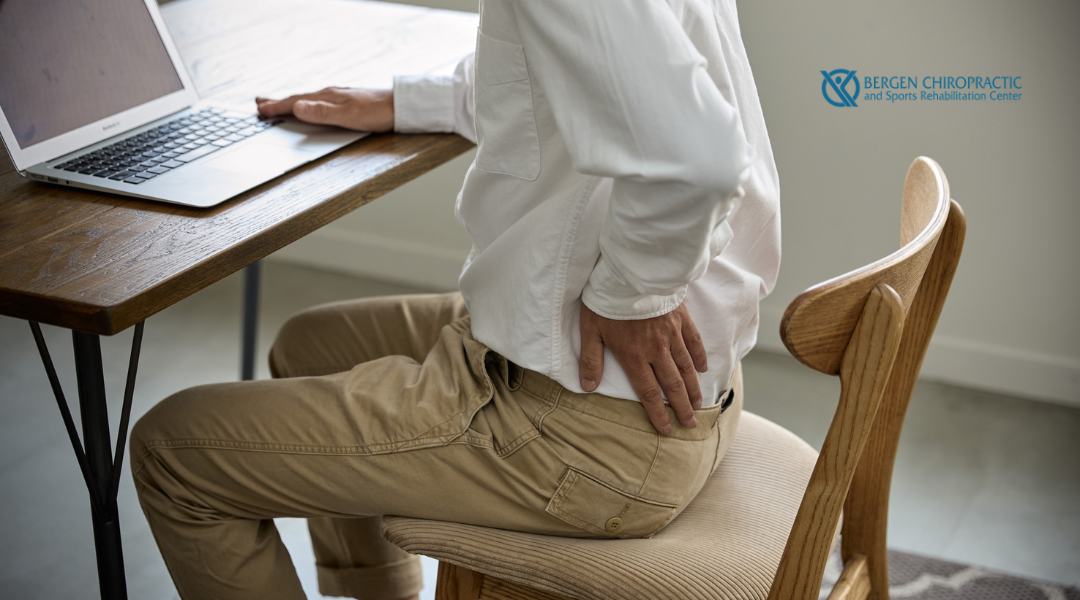
If you find yourself shifting in your office chair, leaning to one side, or rubbing your lower back by mid-afternoon, you are not alone.
Many people experience lower back pain when sitting, often wondering why sitting down, a position that feels like resting, causes more discomfort than standing or walking.
If you find yourself asking, “Why does my lower back hurt when I sit?”, understanding how sitting affects the spine is the first step toward lasting relief.
Why Sitting Can Aggravate Back Pain
Sitting puts significantly more physical stress on your lumbar spine than standing or walking. When you stand, your body weight is distributed naturally across your spine, pelvis, hips, and knees.
The lumbar spine retains its natural inward curve, which acts like a shock absorber.
When you sit, especially for long hours at a desk, several structural changes occur:
- Increased Disc Pressure: The load on your lumbar intervertebral discs increases by up to 40 percent compared to standing. Slouching increases this pressure even further.
- Tighter Hip Flexors: Prolonged sitting keeps your hips in a flexed position, shortening the hip flexors and psoas muscles. When you eventually stand up, these tight muscles pull on the lower spine, creating lower back stiffness.
- Reduced Blood Flow: Sitting still slows down blood circulation to the muscles and spinal tissues, leading to metabolic waste accumulation and localized soreness.
For anyone dealing with desk job back pain, these factors quickly combine to create a cycle of discomfort and tightness.

Common Causes of Lower Back Pain When Sitting
Lower back pain sitting at a desk or on the couch usually stems from one of four primary mechanical causes:
1. Lumbar Disc Irritation or Herniation
The discs between your vertebrae act as cushions. Because sitting forces the lumbar spine into flexion (a rounded position), it pushes the gel-like center of the disc backward. Over time, this constant pressure can lead to disc bulging, irritation, or herniation.
2. Muscle Strain and Postural Fatigue
Your spinal muscles and core work continuously to keep you upright. When you sit for long periods, those muscles fatigue. Once they tire out, your body relies on passive structures like ligaments and spinal joints to hold you up, leading to inflammation and acute muscle strain.
3. Sacroiliac (SI) Joint Dysfunction
The sacroiliac joints connect the base of your spine (sacrum) to your pelvis. Poor sitting positions, such as crossing your legs or sitting on one foot, put uneven pressure on the SI joints. This can lead to localized pain on one side of the lower back that worsens when seated.
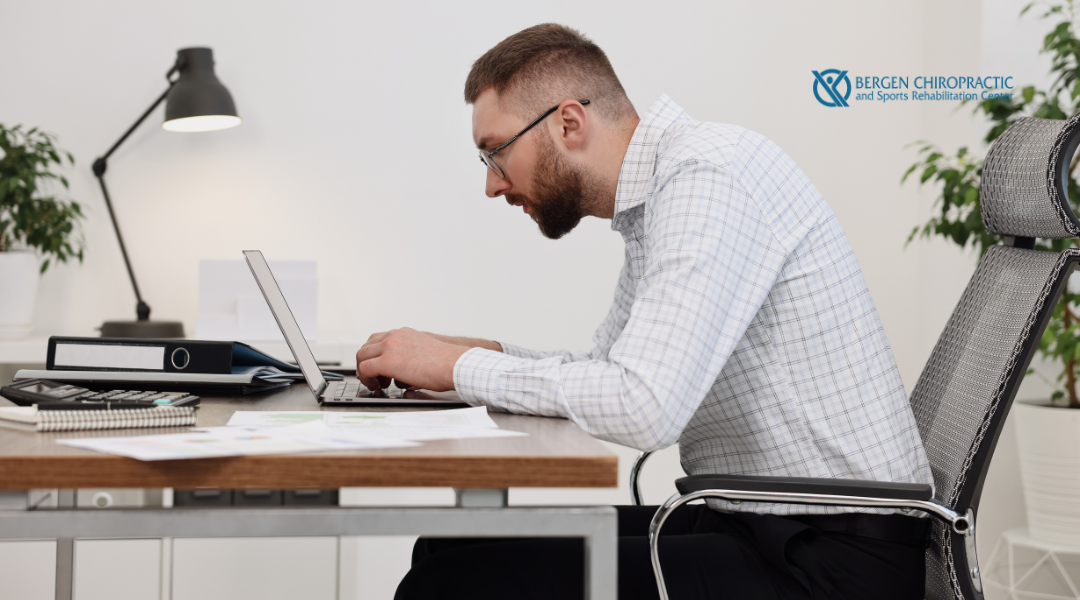
4. Poor Ergonomics and Posture
Unsupportive chairs, improperly positioned computer monitors, and slouched postures force your spine out of its neutral alignment. Over time, this chronic stress weakens core support and aggravates spinal joints.

When Pain May Indicate Nerve Involvement
Sometimes back pain sitting down is accompanied by sensations that travel beyond the lower back itself. This typically happens when an irritated disc or inflamed joint pinches or compresses a nerve root exiting the spine.
You may be dealing with nerve involvement if you experience:
- Sharp, shooting pain that radiates down into the buttock, thigh, or calf (often referred to as sciatica).
- Numbness, pins and needles, or a burning sensation in your leg or foot.
- Weakness in your leg when trying to stand up from a seated position.
If lower back pain shoots down your leg, it is important to address the root mechanical cause rather than simply pushing through the discomfort.
Simple Things to Try at Home
If your lower back stiffness and pain are mild or just starting, a few simple adjustments can make a noticeable difference:
- Adjust Your Ergonomics: Position your chair so your feet are flat on the floor, your knees are at a 90-degree angle, and your lumbar spine is supported. Keep your computer screen at eye level.
- Take Micro-Breaks: Stand up and stretch every 30 to 45 minutes. Even 60 seconds of standing or light walking relieves compressed spinal discs.
- Use Lumbar Support: Place a small rolled towel or dedicated lumbar cushion behind the curve of your lower back to maintain proper alignment.
- Gentle Stretching: Stretch your hip flexors, hamstrings, and glutes daily to reduce tension pulling on your lower spine.
When a Chiropractic Evaluation Is Appropriate
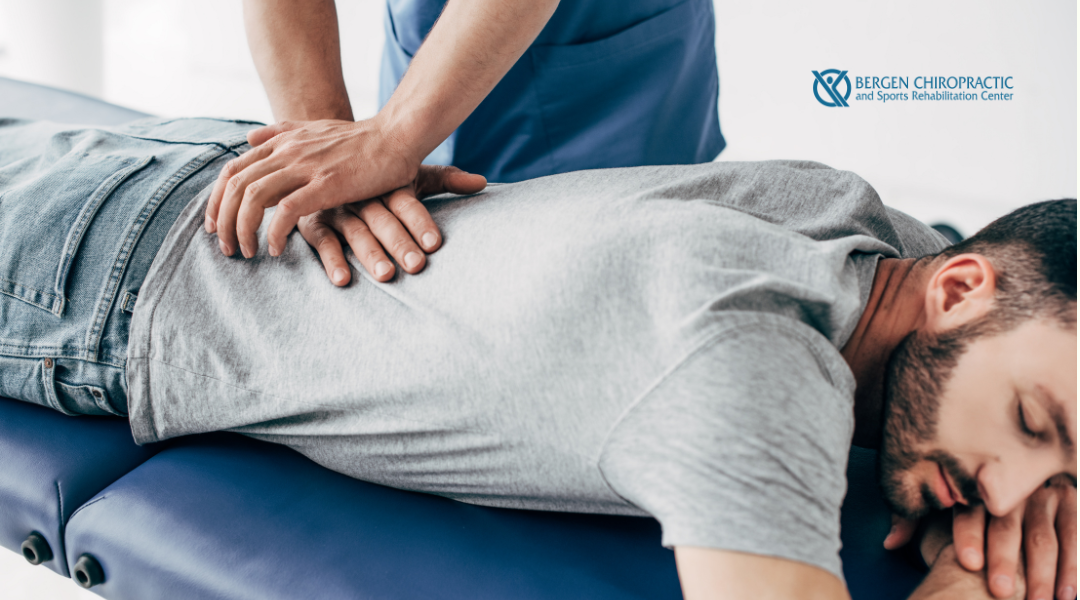
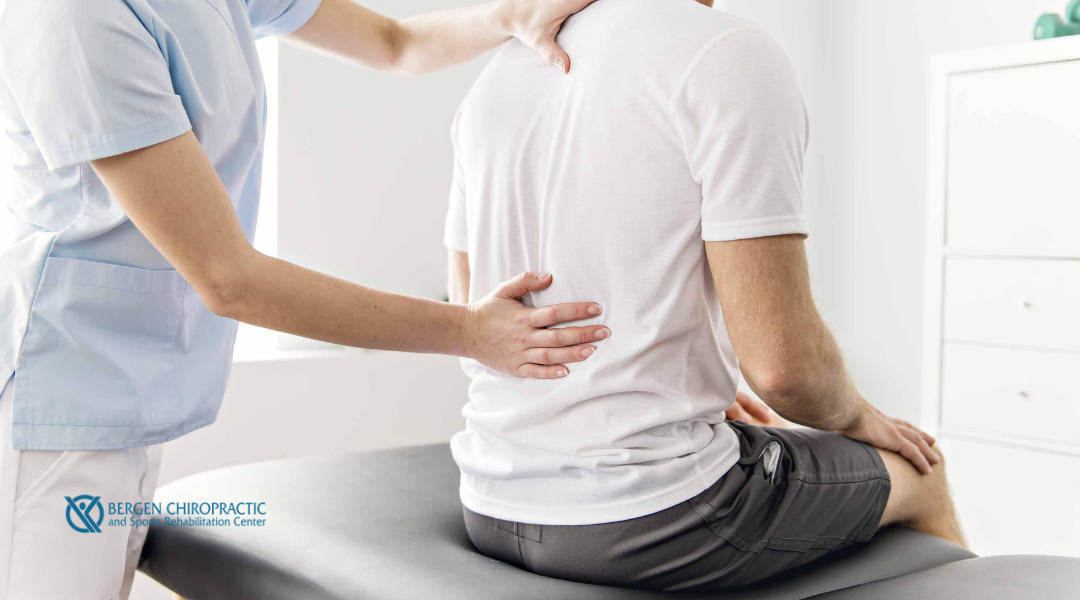
If home adjustments do not provide pain relief, or if your pain returns every time you sit down, consulting a lower back pain chiropractor is a practical next step.
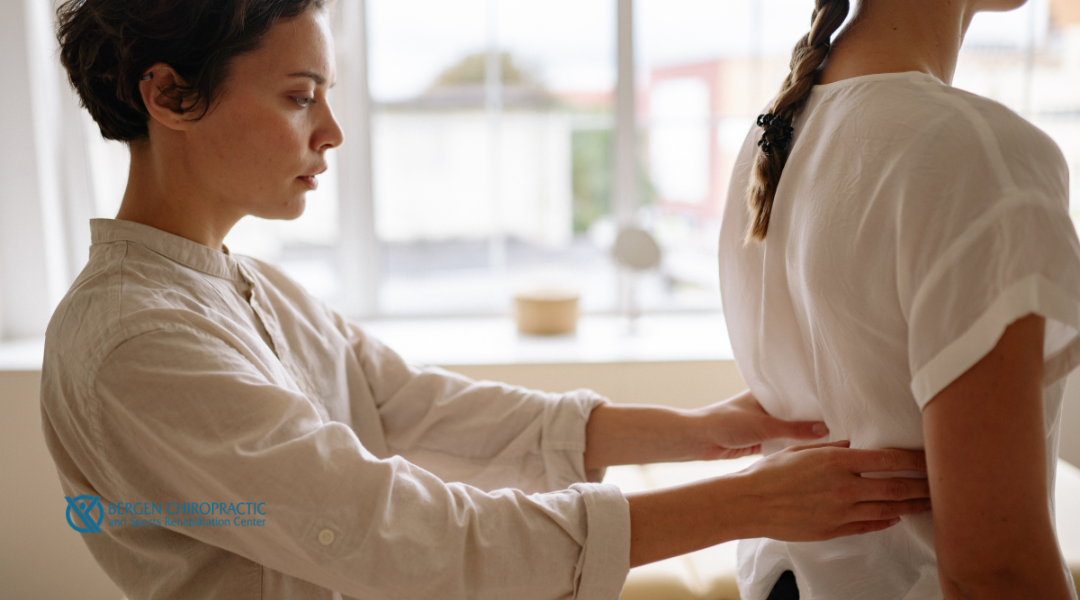
A thorough chiropractic evaluation helps pinpoint the precise structural cause of your discomfort, whether it is a misaligned joint, disc compression, or muscular imbalance.
Chiropractic care focuses on restoring proper joint mechanics, relieving nerve pressure, and providing tailored rehabilitation exercises to keep your spine supported while you sit.
Taking Control of Your Spine Health
Lower back pain when sitting is your body’s clear sign that your spine is carrying more stress than it should. Whether your discomfort stems from postural fatigue, disc pressure, or joint dysfunction, you do not have to accept sitting in pain as part of your daily routine.
The chiropractic team at Bergen Chiropractic and Sports Rehabilitation Center adheres to the highest medical standards to provide superior chiropractic care. Our mission is to deliver unparalleled patient care in a comfortable and healing environment.
Access our contact form or call us at (201) 357-6539 to learn more about our chiropractic care services! Our offices at 532 Anderson Avenue, Cliffside Park, NJ 07010, and 62 Summit Ave, Hackensack, NJ 07601, are ready to welcome you as we proudly serve the areas of New York, New Jersey, Philadelphia, PA, and Baltimore, MD. Also, access our blog, Facebook, and Instagram pages for more information on chiropractic care!