Rib pain when breathing is often musculoskeletal, meaning it comes from the muscles, joints, or connective tissue around your ribs and upper back rather than your heart or lungs.
Common causes include a strained intercostal muscle, an irritated rib or thoracic spine joint, or overworked muscles. All of them hurt more when your rib cage expands.
Because chest pain can also point to something more serious, it helps to know the signs of a movement-related problem and when to get checked right away.

Why Do My Ribs Hurt When I Breathe?
Your rib cage expands with every breath, so any irritated muscle or joint around it gets stretched about 20,000 times a day. That’s why a small strain can feel so stubborn.
Musculoskeletal rib pain may feel sharp, sore, tight, or achy, and it usually gets worse with deep breaths, coughing, sneezing, or upper-body movement. The three most common causes are below.
Intercostal Muscle Strain
The intercostal muscles sit between your ribs and help the chest wall expand and contract. When one is strained, even a normal breath can pull on the injured tissue.
These strains often follow a sudden twist, heavy lifting, intense exercise, repetitive upper-body activity, or a long bout of coughing. Pain between or around the ribs typically gets worse when you:
- Take a deep breath.
- Cough or sneeze.
- Twist your upper body.
- Reach overhead.
- Bend to the side.
- Press on the affected area.
Because you use these muscles for both breathing and movement, they rarely get a full break, so the pain can linger until the tissue heals.
Rib Joint and Thoracic Spine Dysfunction
Each rib connects to the thoracic spine (your mid and upper back), forming small joints that move every time you breathe, rotate, or reach.
When these joints get stiff or irritated, pain can show up around the ribs, chest wall, shoulder blade, or mid-back. Sometimes it seems to wrap around one side of the rib cage. Twisting, reaching, and prolonged sitting often make it worse, as can a rounded upper back. This is why rib pain sometimes starts in the spine rather than the rib itself.
Muscle Tension or Overuse
The muscles around your chest, shoulders, and upper back can also become tight and fatigued when they are stressed again and again.
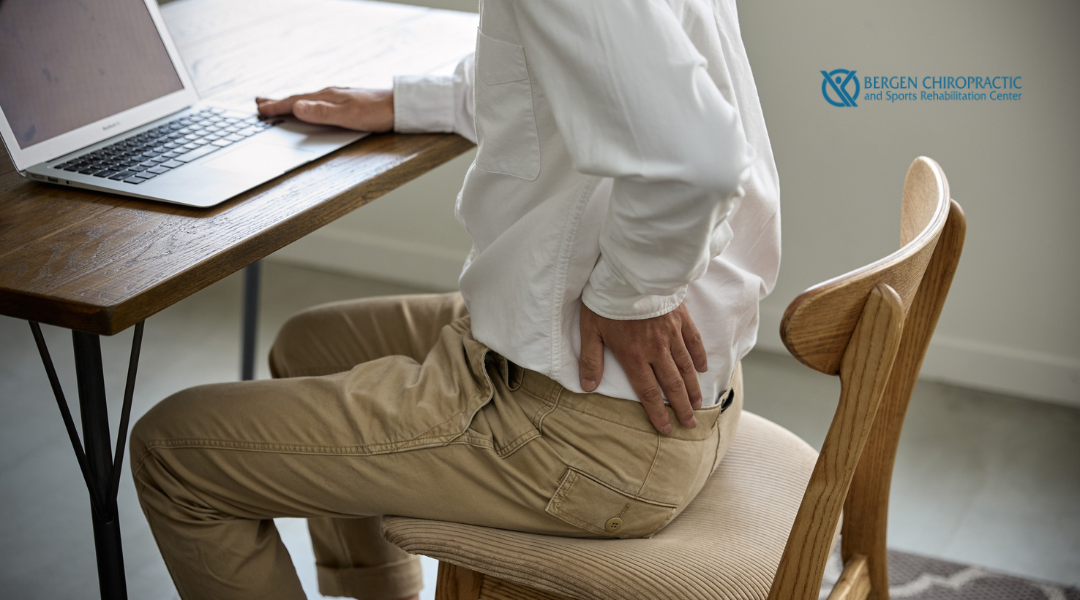
Long hours at a computer, repetitive lifting, a sudden jump in training, rotational sports, and persistent coughing are common triggers. This type of pain tends to feel like a dull ache or tightness rather than a sharp jab, and it often builds toward the end of the day. The same posture-related tension can also feed into neck pain and posture headaches.

How Can You Tell if Rib Pain Is Musculoskeletal?
The biggest clue is that the pain changes with movement, position, or pressure. If you can reliably trigger it by twisting, reaching, or pressing on one spot, muscles or joints are likely involved. Even so, new, severe, or unexplained chest pain should never be assumed to be musculoskeletal.
Pain With Twisting, Reaching, or Deep Breathing
Musculoskeletal pain is often predictable. You may feel fine sitting still, then feel a twinge when you rotate your torso, bend sideways, raise an arm, or take a full breath.
Notice which movements set it off. A consistent pattern points toward a musculoskeletal source and gives your provider useful information during an evaluation.
Tenderness When You Press the Area
Pressing along the sore rib, between the ribs, or over nearby muscles often reproduces musculoskeletal pain exactly. This kind of spot tenderness is common with muscle strains, irritated soft tissue, and rib joint problems.
Tenderness alone can’t confirm the cause. A provider combines it with your symptoms, recent activities, medical history, and a physical exam.
When Should Rib Pain Be Checked Right Away?
Get emergency care (call 911) if rib or chest pain comes with any of the following:
- Shortness of breath or difficulty breathing
- Chest pressure, or pain spreading to the arm, jaw, neck, or back
- Sweating, nausea, dizziness, or fainting
- Fever, chills, or coughing up blood
- A recent fall, accident, or direct blow to the chest
- Pain that is severe, worsening, or not affected by movement
Once those causes are ruled out, a movement-focused evaluation can help pinpoint what’s driving the pain.
Can a Chiropractor Help With Musculoskeletal Rib Pain?
Yes. When rib pain comes from the muscles, joints, or movement of the thoracic spine and rib cage, chiropractic care can help restore mobility and reduce irritation. Because the ribs attach directly to the thoracic spine, stiffness there can affect how comfortably you breathe, twist, and reach.
At Bergen Chiropractic and Sports Rehabilitation Center, we take a movement-based approach. Instead of focusing only on where it hurts, we look at how your joints, muscles, and soft tissues work together, then build treatment around what we find.
Assessing Rib and Thoracic Spine Movement
Effective treatment starts with finding the source of the restriction or irritation.
Your chiropractor will assess how your thoracic spine, ribs, shoulders, and surrounding muscles move during different activities. This helps reveal joint restrictions, muscle tension, or compensation patterns that put extra stress on the painful area. For example, pain on a deep breath may come less from the rib itself and more from limited thoracic mobility or tight surrounding tissue.
Your plan is based on your symptoms, history, and exam findings, not a one-size-fits-all protocol.
Chiropractic, Soft Tissue Therapy, and Rehabilitation
Musculoskeletal rib pain usually responds best to combined care. Depending on your exam, your plan may include chiropractic adjustments or joint mobilization, soft tissue therapy, and rehabilitation exercises.
Adjustments and mobilization restore movement through the thoracic spine and rib joints.
Soft tissue therapy releases tight or overworked muscles and fascia using techniques such as Active Release Technique (ART), Graston Technique, and FAKTR.
Rehabilitation exercises rebuild mobility, strength, and coordination so you can return to independent activity with a lower risk of reinjury.
By treating joint movement, soft tissue restrictions, and how your body moves as a whole, care targets the cause of your rib pain, not just the symptoms.

Find Relief From Persistent Rib Pain with Bergen Chiropractic!
The chiropractic team at Bergen Chiropractic and Sports Rehabilitation Center adheres to the highest medical standards to provide superior chiropractic care.
Our mission is to deliver unparalleled patient care in a comfortable and healing environment.
Access our contact form or call us at (201) 945-4075 to learn more about our chiropractic care services! Our offices at 532 Anderson Avenue, Cliffside Park, NJ 07010, and 62 Summit Ave, Hackensack, NJ 07601, are ready to welcome you as we proudly serve the areas of New York, New Jersey, Philadelphia, PA, and Baltimore, MD.
Also, access our blog, Facebook, and Instagram pages for more information on chiropractic care!