If you frequently experience a dull, aching sensation wrapping around your forehead or a tight band of pressure at the base of your skull, your daily posture might be to blame.
Many people are surprised to learn that persistent neck tension and slouching directly contribute to frequent head pain.
Understanding how spinal alignment and muscle strain trigger posture headaches is the first step toward finding relief.
Different Headache Types Related to Posture
Not all headaches are created equal, but poor posture is a leading driver for two primary types:
- Tension Headaches: These are the most common type of head pain. They often feel like a tight band wrapped around your forehead, temples, or the back of your head. Muscle tightness in the upper back, shoulders, and neck often triggers these aches.
- Cervicogenic Headaches: Unlike general tension headaches, cervicogenic headaches originate directly from structural issues in the upper cervical spine (the upper neck). The pain refers upward from the neck joints and nerves into the head, typically affecting one side and worsening with specific neck movements.
How Neck Joints Contribute to Headaches
Your head weighs approximately 10 to 12 pounds when held in a neutral, balanced alignment directly over your shoulders. When you lean forward or hunch over, the effective workload on your upper cervical spine increases dramatically.
As shown in the referral pain map above, upper neck joints (particularly C2-C3) send pain signals straight up into the base of the skull and over the head. When poor posture keeps these joints restricted or inflamed, it causes surrounding suboccipital muscles to contract constantly.
This structural irritation triggers a trickle-down effect: tight muscles compress delicate occipital nerves, sending persistent pain upward into the head.

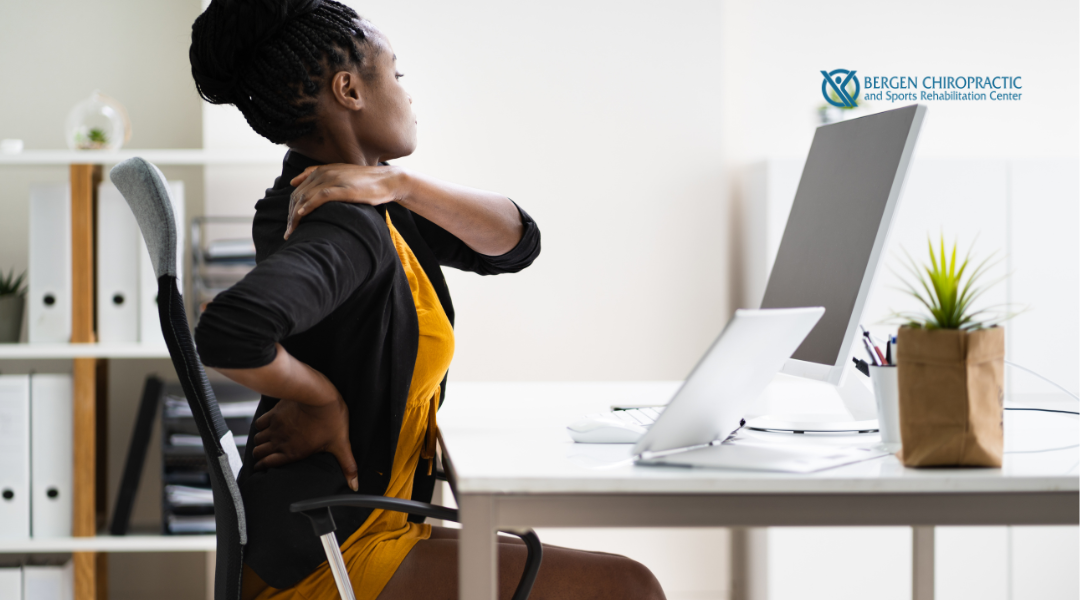
Desk Posture and Headaches from Computer Work
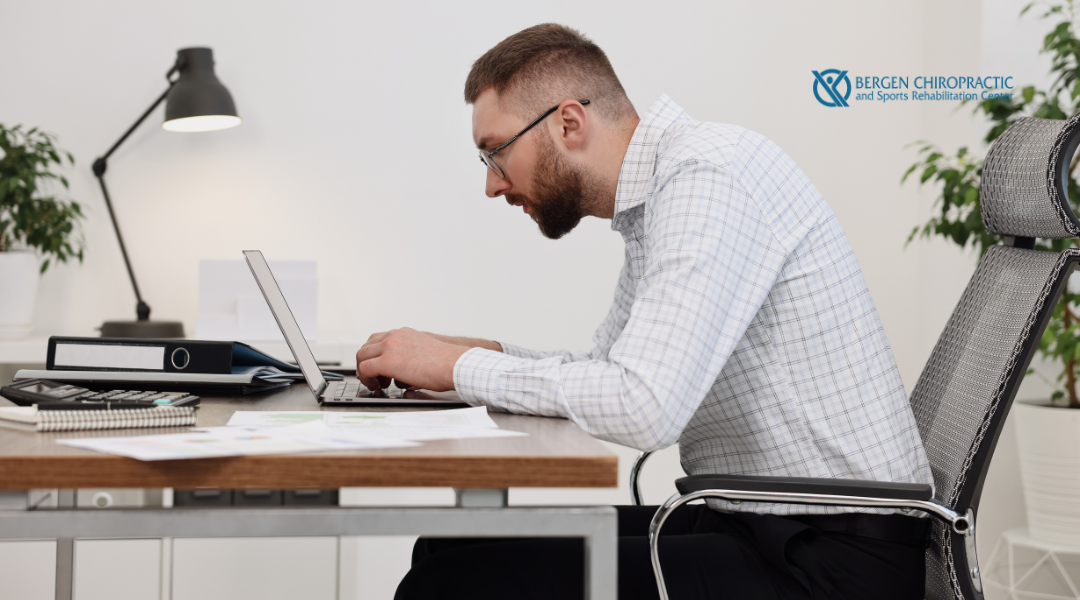
Spending eight hours a day in front of a monitor creates the ideal environment for headaches. Common office habits that contribute to pain include:
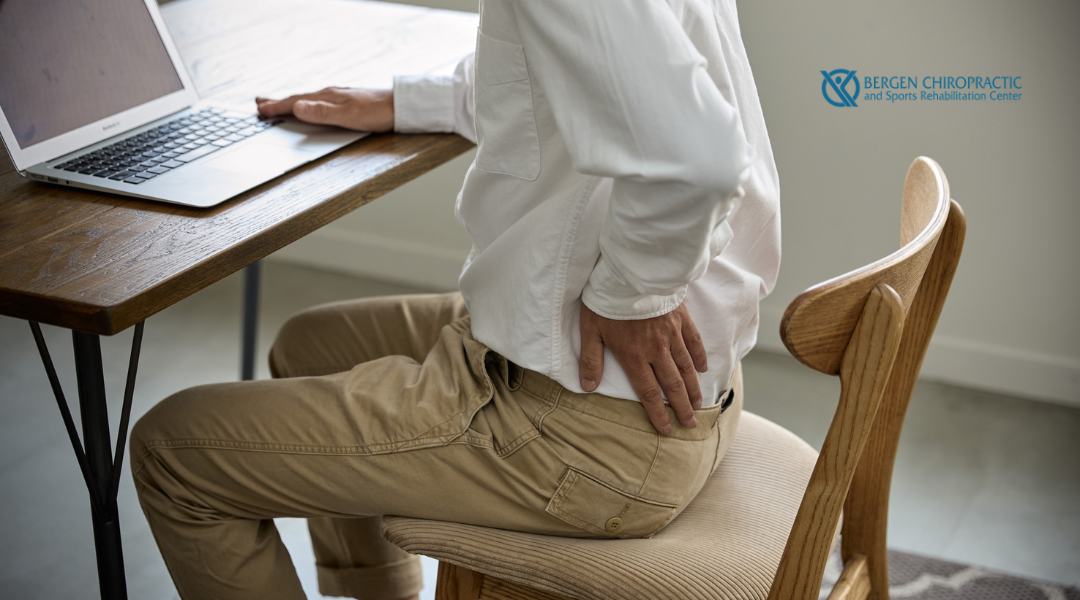
- Slouching in your chair: Rounds the middle back and forces the neck to extend upward to view the screen.
- Monitors set too low: Forces you to look down continuously, straining the upper trapezius and levator scapulae muscles.
- Reaching for the mouse or keyboard: Pulls the shoulder blades forward, creating chronic tightness across the chest and upper back.
Over time, this mechanical fatigue manifests as mid-afternoon headaches, upper back stiffness, and reduced neck mobility.
Tech Neck and Modern Strains
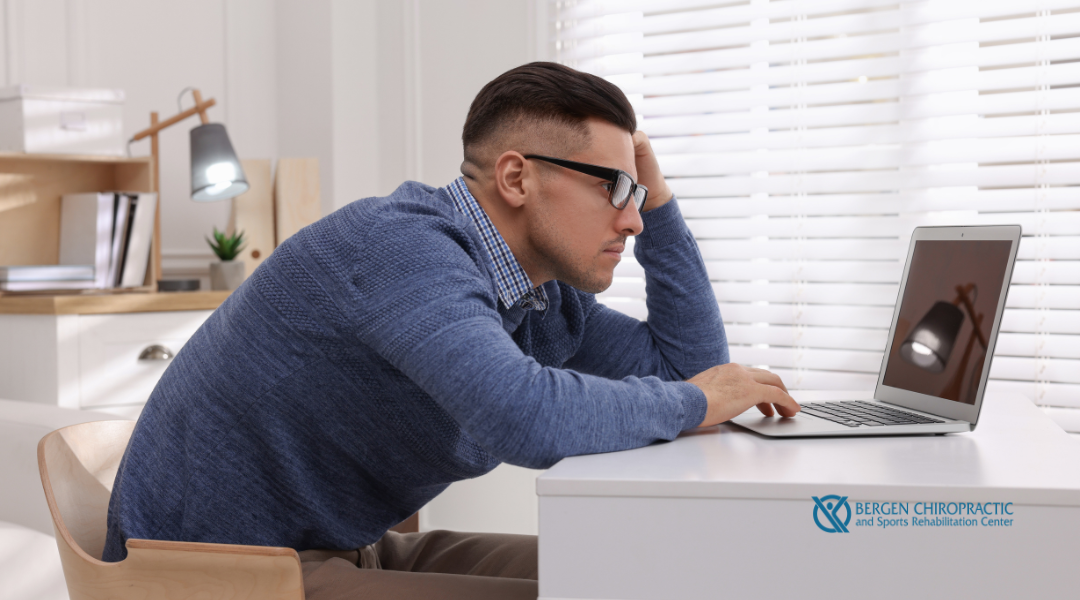
The term “tech neck” refers to the strain on the cervical spine from prolonged looking down at mobile devices, tablets, or laptops.
Tilting your head forward just 45 degrees increases the force on your neck to roughly 49 pounds. Your neck muscles and joints were not designed to hold that amount of weight for hours at a time.
The resulting chronic fatigue often leads to a combination of neck pain, headaches, fatigue, and even mild dizziness from strained neck muscles and joint dysfunction.
Warning Signs Requiring Immediate Medical Evaluation
While most posture-related headaches respond well to physical corrections and conservative care, certain symptoms require immediate medical attention to rule out more serious underlying conditions.
Seek prompt medical care if your headache is accompanied by:
- A sudden, severe “thunderclap” onset of pain.
- High fever, stiff neck, confusion, or sudden vomiting.
- Neurological changes such as slurred speech, vision loss, facial drooping, or sudden weakness.
- Headaches that begin immediately following a head injury or physical trauma.
Conservative Chiropractic Care for Posture Headaches
If posture headaches are interfering with your productivity and daily life, a tension headache chiropractor can help identify the root cause.
Chiropractic evaluation focuses on assessing spinal alignment, joint mobility, and muscular imbalances in the neck and upper back. Treatment typically involves gentle spinal adjustments to restore proper joint motion, targeted soft tissue therapy to release tight suboccipital muscles, and custom posture exercises to prevent pain from returning.

Reclaiming Pain-Free Days with Bergen Chiropractic
A headache from bad posture is your body’s signal that your cervical spine is under excessive physical stress.
The chiropractic team at Bergen Chiropractic and Sports Rehabilitation Center adheres to the highest medical standards to provide superior chiropractic care. Our mission is to deliver unparalleled patient care in a comfortable and healing environment.
Access our contact form or call us at (201) 357-6539 to learn more about our chiropractic care services! Our offices at 532 Anderson Avenue, Cliffside Park, NJ 07010, and 62 Summit Ave, Hackensack, NJ 07601, are ready to welcome you as we proudly serve the areas of New York, New Jersey, Philadelphia, PA, and Baltimore, MD. Also, access our blog, Facebook, and Instagram pages for more information on chiropractic care!