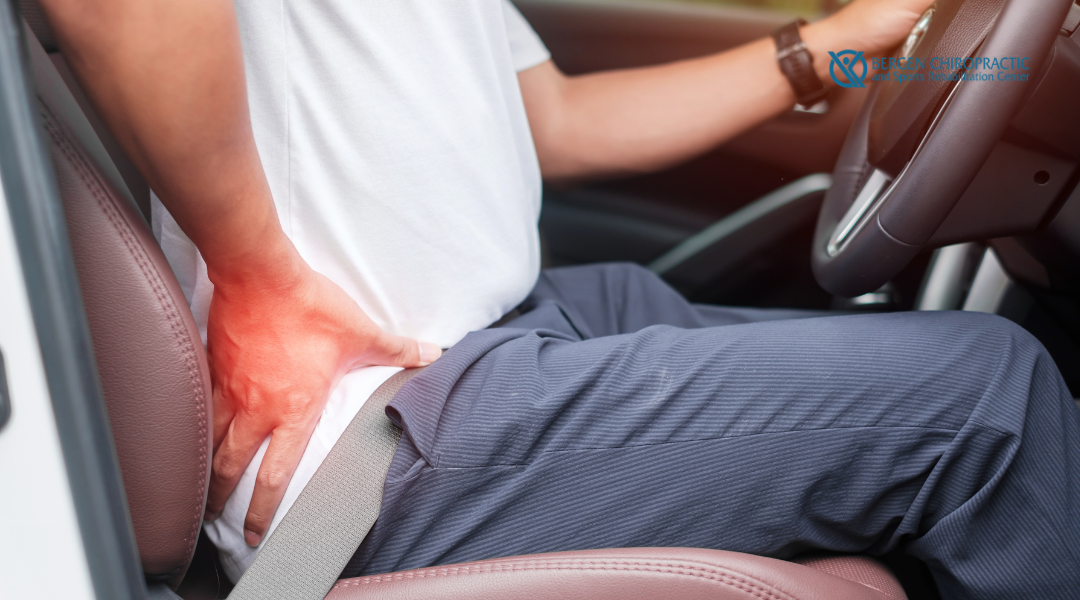
You twisted to grab something from the back seat, or maybe you had a coughing fit that wouldn’t quit. Now, weeks later, your ribs still sting every time you take a deep breath, reach overhead, or roll over in bed.
If this sounds familiar, you could be dealing with an intercostal muscle strain. These small muscles sit between your ribs, and they’re surprisingly hard to rest. Every breath, laugh, and sneeze puts them back to work.
The good news is that a slow recovery doesn’t mean you’re stuck with the pain. Understanding what’s holding your healing back is the first step toward moving comfortably again.
Before assuming your rib pain is muscular, rule out anything more serious. Chest pressure, shortness of breath, pain spreading to your arm or jaw, or pain after a fall can signal that rib pain when breathing isn’t coming from a strained muscle at all, and those symptoms need medical attention right away.
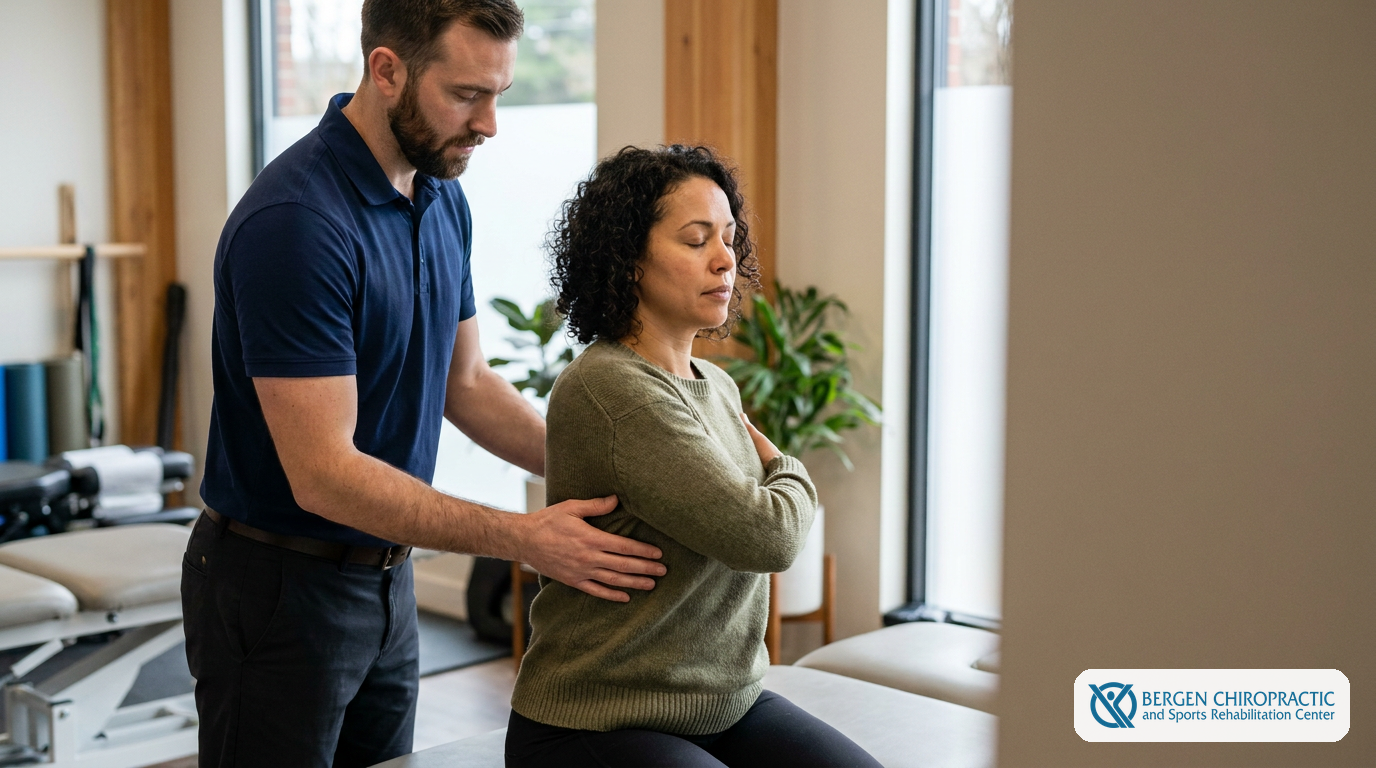
Why Can an Intercostal Muscle Strain Take So Long to Heal?
Most muscle strains improve when you give the injured area a break. The challenge with intercostal muscles is that a full break isn’t possible.
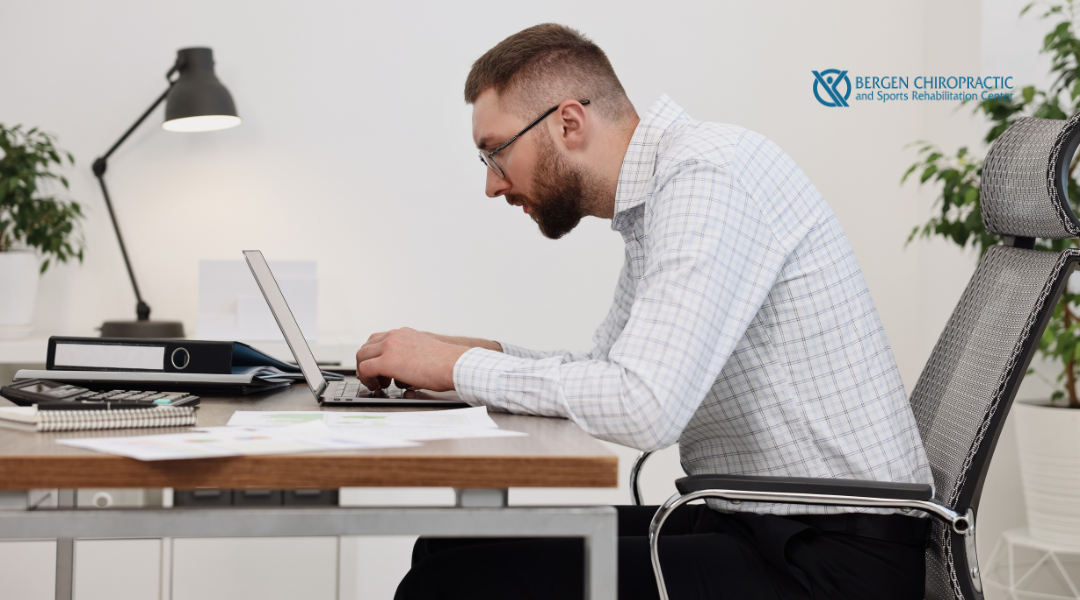
You breathe thousands of times a day, and each breath stretches and contracts the muscles between your ribs. Add twisting, bending, carrying groceries, or sitting at a desk, and those muscles rarely get the downtime they need to recover.
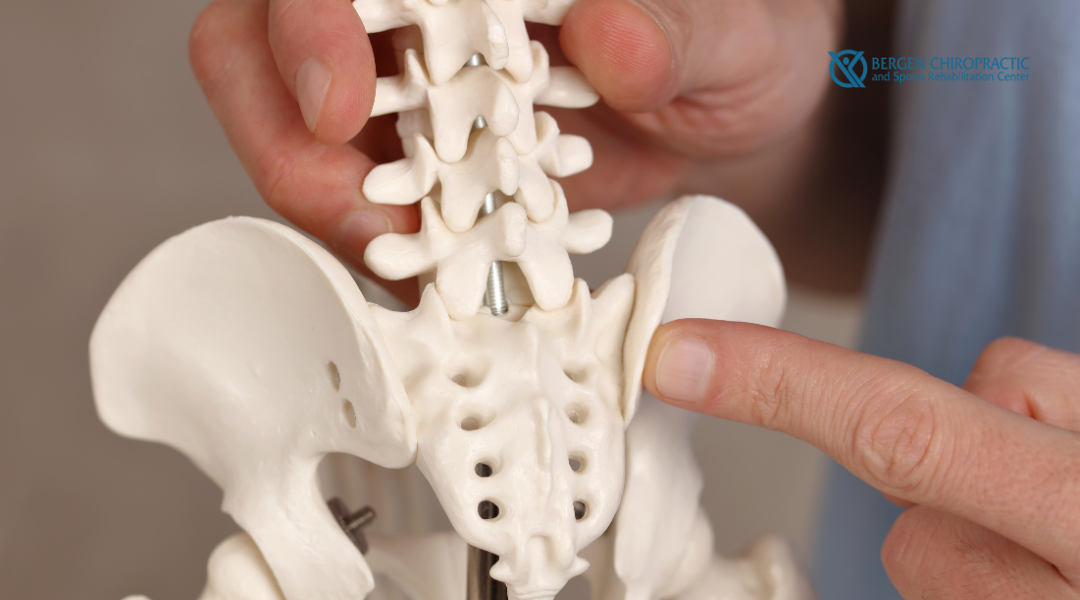
The rib cage is also connected to your thoracic spine, which is the middle section of your back. When one area stiffens or becomes irritated, the surrounding structures often compensate, which can keep the cycle of discomfort going.
What Can Slow Down Intercostal Muscle Recovery?
Returning to Activity Too Soon
Feeling a little better is encouraging, but it doesn’t always mean the muscle has fully recovered. Going straight back to heavy workouts, golf, tennis, or lifting can re-irritate tissue that’s still healing.
Repetitive Twisting or Lifting
Rotation is one of the main jobs of the muscles around your ribs. Shoveling, vacuuming, carrying a child on one hip, or rotational sports can repeatedly load the injured area before it’s ready.
Limited Rib and Thoracic Mobility
If your upper back and ribs aren’t moving well, the strained muscle may be forced to work harder with every breath and movement. Many people with lingering rib pain also notice stiffness or pain between the shoulder blades, since these areas work closely together.
Ongoing Muscle Tension
Pain makes us guard. You might start taking shallow breaths, holding your shoulders tight, or avoiding certain movements. That protective tension is understandable, but over time it can lead to more stiffness and soreness.
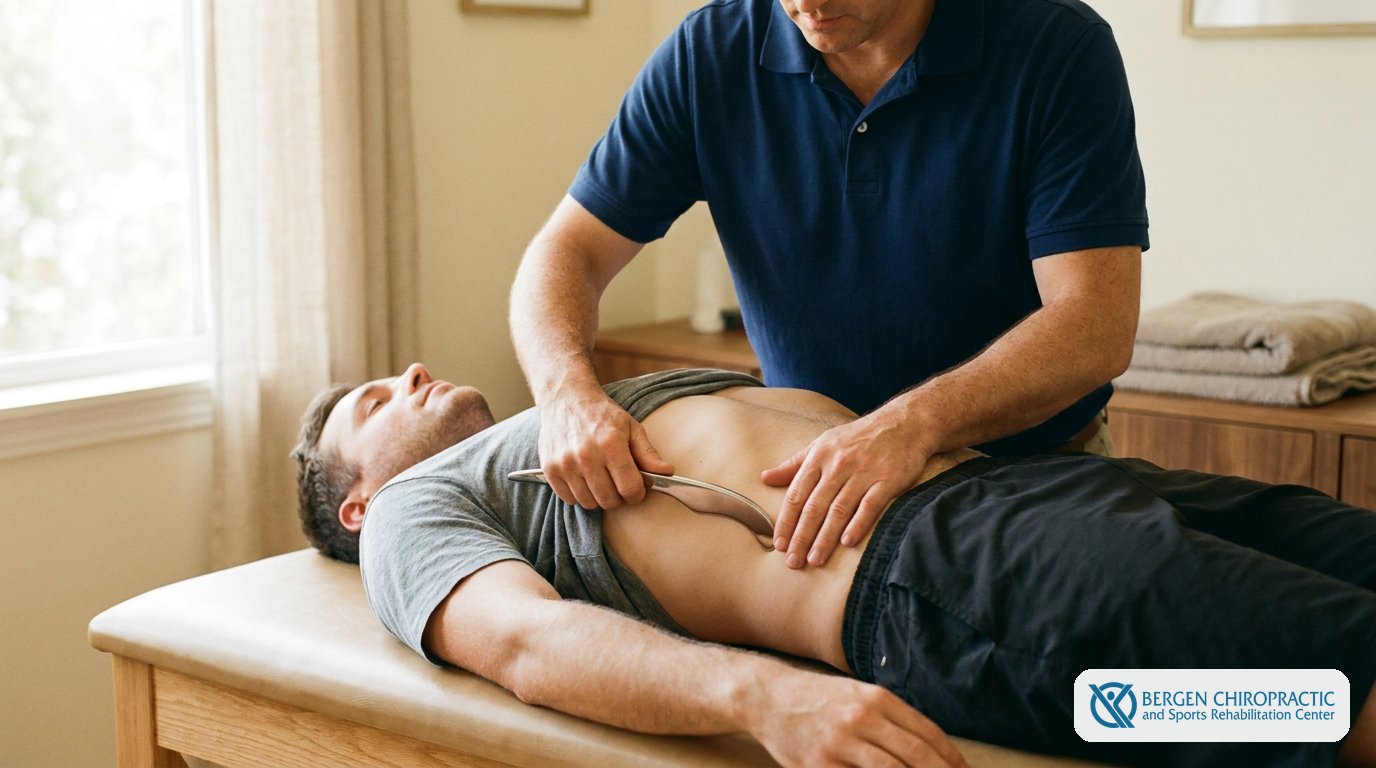
How Can Chiropractic Care Support Intercostal Muscle Strain Recovery?
At Bergen Chiropractic and Sports Rehabilitation Center, we don’t just focus on where it hurts. We look at how your ribs, spine, and surrounding muscles are working together, then build a plan around what we find.
Assessing Rib and Thoracic Spine Movement
Your first visit starts with a detailed conversation about when the pain began, what aggravates it, and how it’s affecting your daily life. We’ll then assess how your ribs and mid-back move, check muscle tenderness, and look for patterns that may be slowing your recovery.
Soft Tissue Therapy
Our soft tissue techniques include Graston Technique, Active Release Technique (ART), and FAKTR, a functional treatment approach co-developed by our own Dr. Gregory Doerr. These methods are selected based on your symptoms and tolerance, and they aim to reduce tension, improve tissue movement, and support healing. Treatment pressure is always adjusted to what feels manageable.
Improving Mobility
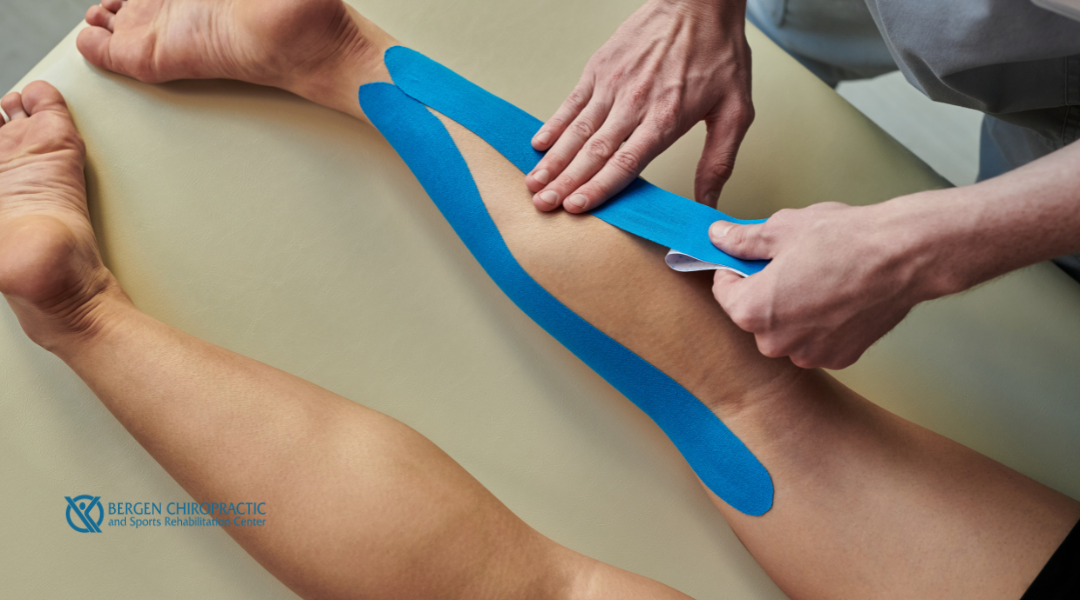
When stiffness in the thoracic spine or ribs is part of the problem, gentle mobilization or chiropractic adjustments may be considered after we discuss whether they’re suitable for you. Between appointments, kinesiology taping can offer light support for the area without restricting your breathing or movement, and Dr. Doerr’s functional taping techniques are tested beforehand to make sure the application suits your injury.
Guided Rehabilitation and Return to Activity
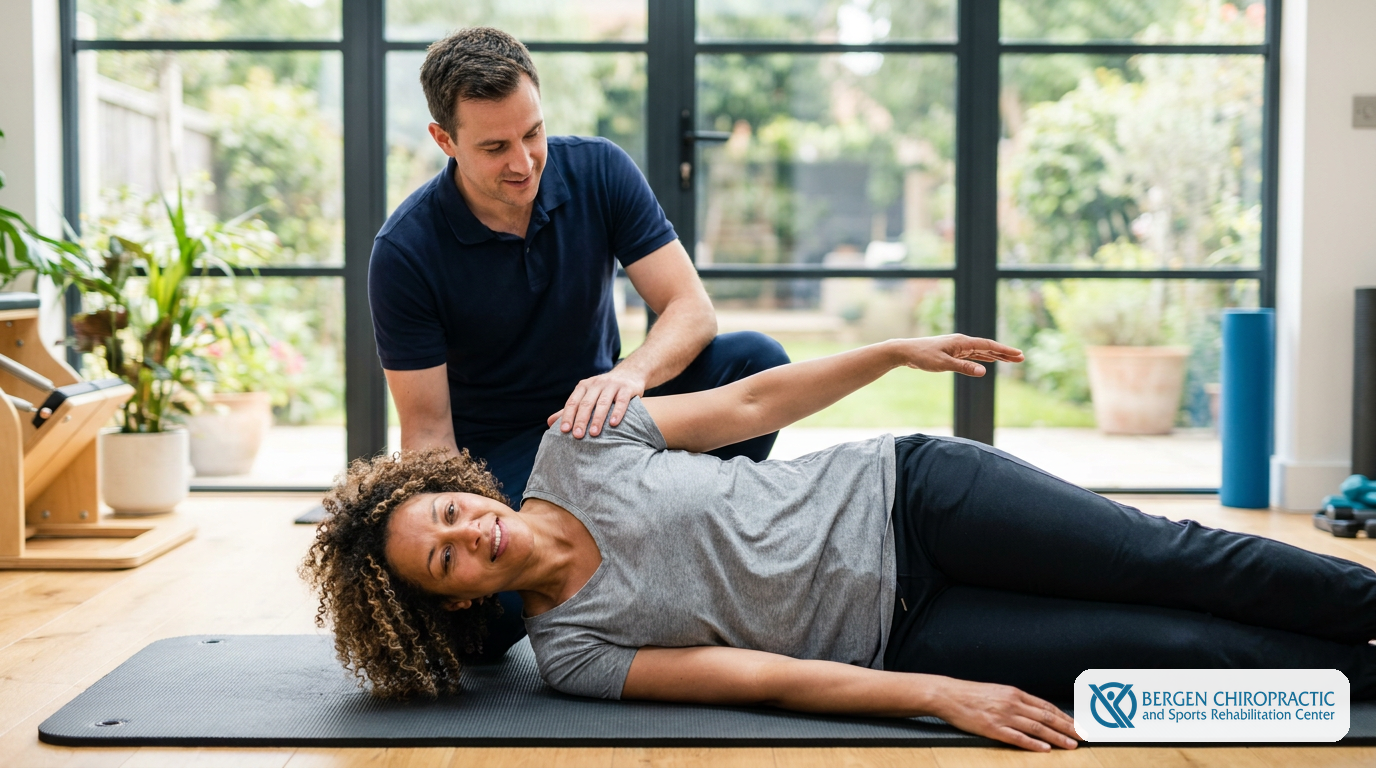
Recovery isn’t complete just because the pain eases. We’ll guide you through breathing-friendly mobility work and progressive strengthening exercises, then help you plan a safe return to the activities you enjoy. For athletes, our athletic injury treatment approach focuses on getting you back to training without rushing the process.
Intercostal Muscle Strain FAQs
Can a chiropractor help with an intercostal muscle strain?
Yes, a chiropractor can help manage an intercostal muscle strain, particularly when stiffness, muscle tension, or limited movement is slowing recovery. Care typically combines an assessment with soft tissue therapy, mobility work, and rehabilitation exercises. If we find signs that something other than a muscle strain is involved, we’ll refer you to the appropriate provider.
Should you stretch an intercostal muscle strain?
Gentle movement is often helpful, but aggressive stretching too soon can irritate the injury. Like any pulled muscle, an intercostal strain needs time to settle before it can handle a deeper stretch. Any stretching should feel mild and controlled, never sharp or painful. If a stretch makes your pain worse or causes it to spread, stop and get personalized guidance.
How long can an intercostal strain take to heal?
Mild intercostal strains often improve within a few weeks, while more significant strains can take longer. Your recovery depends on the severity of the strain, your daily activities, and whether factors like stiffness or repeated strain are slowing healing. If your pain hasn’t improved after a few weeks, or keeps returning, it’s worth getting an assessment.
Get Back to Moving Comfortably with Bergen Chiropractic!
The chiropractic team at Bergen Chiropractic and Sports Rehabilitation Center adheres to the highest medical standards to provide superior chiropractic care.
Our mission is to deliver unparalleled patient care in a comfortable and healing environment.
Access our contact form or call us at (201) 357-6539 to learn more about our chiropractic care services! Our offices at 532 Anderson Avenue, Cliffside Park, NJ 07010, and 62 Summit Ave, Hackensack, NJ 07601, are ready to welcome you as we proudly serve the areas of New York, New Jersey, Philadelphia, PA, and Baltimore, MD. Also, access our blog, Facebook, and Instagram pages for more information on chiropractic care!