A stubborn shoulder knot that seems connected to a headache can be confusing. So can lower back discomfort that spreads toward your hip. Sometimes, the area where you feel pain is not its original source.
Trigger points are sensitive areas within muscles that may cause local tenderness or referred pain, meaning discomfort felt elsewhere. Chiropractic care may help manage associated muscle tension and movement limitations, but an assessment matters because not all spreading pain comes from muscles.
What Are Trigger Points and Referred Pain?
Trigger points are commonly described as “muscle knots,” although this does not mean the muscle is literally tied in a knot. They are tender areas that may hurt when pressed and sometimes reproduce discomfort beyond the sensitive spot.
Trigger points can occur with myofascial pain syndrome, a persistent pain condition involving muscles and the surrounding connective tissue called fascia. However, an occasional sore muscle does not automatically mean you have this condition.
Referred pain describes where discomfort is perceived, not a diagnosis. Because muscle, joint, and nerve conditions can produce overlapping symptoms, pain location alone cannot reliably identify the cause.
Common Trigger Point Locations and Pain Patterns
Trigger points can develop throughout the body. Symptoms vary, and these examples are not a substitute for an examination.
Neck and Shoulders
Sensitive areas in the upper trapezius and surrounding neck muscles may be associated with shoulder aching, neck stiffness, or pain extending toward the head.
You might notice discomfort after prolonged computer work, driving, or activities that keep your shoulders raised. However, recurring headaches deserve assessment rather than automatically being attributed to a tight muscle.
Upper and Lower Back
Tender muscles around the shoulder blades may cause localized aching or discomfort across the upper back. Lower back muscle sensitivity may also accompany pain around the buttocks or hips.
A chiropractor can assess whether muscle tenderness, joint movement, or another issue appears relevant. Pressing a painful spot at home cannot confirm the diagnosis.
Hips and Glutes
Sensitive gluteal muscles may contribute to buttock, hip, or thigh discomfort. These symptoms can sometimes resemble nerve-related pain.
True sciatica involves irritation or compression of the sciatic nerve. Tingling, numbness, weakness, or burning pain extending down a leg should not simply be dismissed as a muscle knot.
What Causes Trigger Points to Develop?
The exact mechanisms behind trigger points are not fully understood. Muscle injury, repeated strain, and stress-related tension may contribute.
Common contributing factors include:
- Repetitive activity: Repeating the same lifting, reaching, or sporting movement without sufficient recovery.
- Sustained positions: Spending long periods at a desk or behind the wheel without changing position.
- Sudden workload increases: Adding more exercise, heavier weights, or unfamiliar physical tasks too quickly.
- Previous injuries: Moving differently while recovering, which can increase demands on surrounding muscles.
- Stress: Regularly clenching the jaw or holding tension through the shoulders.
No single “perfect posture” prevents muscle pain. Varying positions, building physical capacity, and allowing recovery are more practical goals than trying to sit all day rigidly.

How Can Chiropractic Care Help With Trigger Point Pain?
Chiropractic care may help some people manage muscle-related pain through hands-on treatment, exercise, and movement advice. The approach should follow an assessment, not the assumption that every tender spot needs an adjustment.
Your chiropractor may ask when symptoms began, what aggravates them, and whether pain affects sleep, work, or exercise. An examination may include muscle tenderness, joint mobility, strength, and checks for nerve involvement.
Soft Tissue Therapy
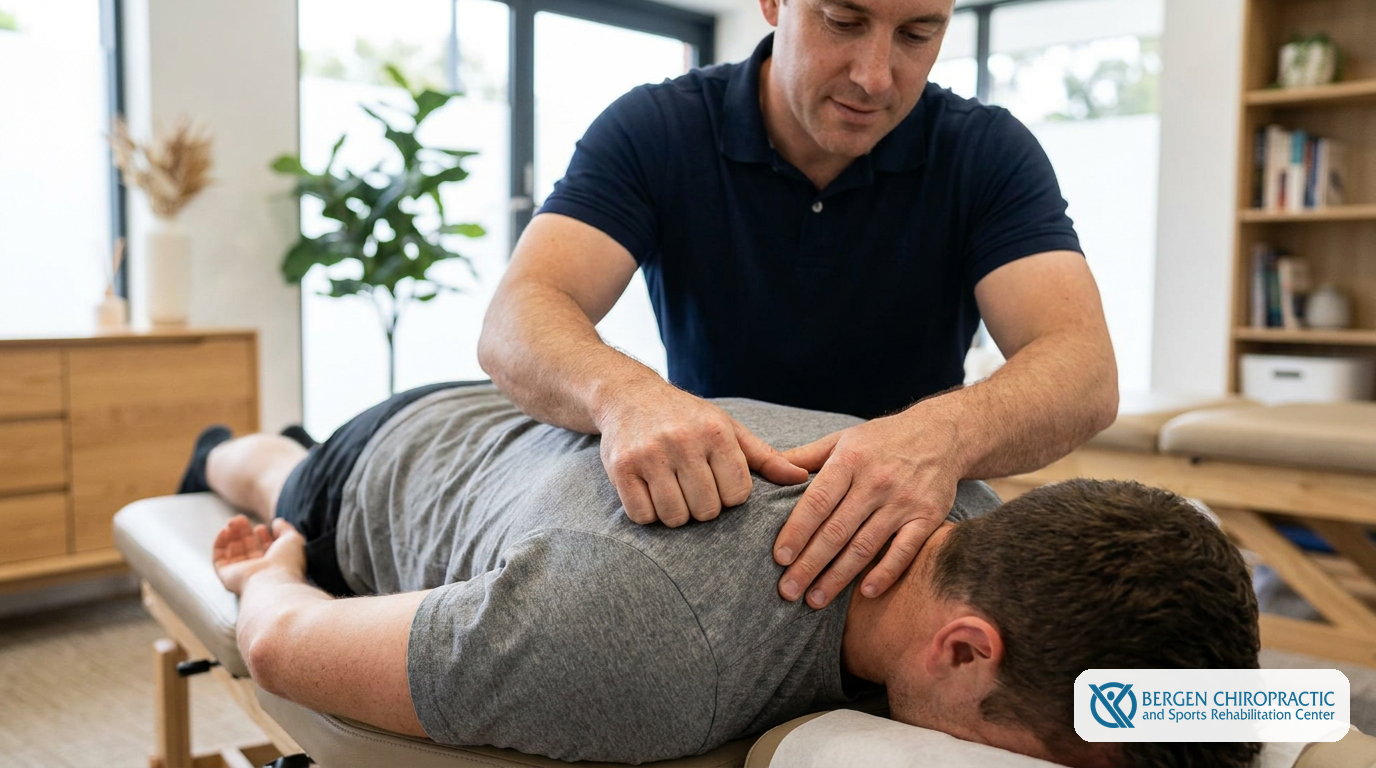
Manual pressure, massage, and related techniques may help reduce tenderness and improve comfortable movement.
Bergen Chiropractic’s soft tissue treatment options address muscles and surrounding tissues as part of its broader musculoskeletal care approach.
Adjust treatment pressure to your tolerance. More discomfort does not necessarily mean a technique is working better.
Joint Mobilization or Adjustments
When joint stiffness contributes to movement difficulties, you may consider mobilization or an adjustment after discussing suitability, risks, and alternatives.
Adjustments should not be described as directly removing trigger points. They may address a related joint problem, while muscle symptoms require their own assessment and management.
Stretching and Rehabilitation
Gentle mobility work and progressive strengthening can help improve movement tolerance, endurance, and control. Exercises should match your symptoms and abilities, not a generic routine.
Mayo Clinic’s treatment guidance identifies exercise as an important component of myofascial pain management and notes that people may need more than one treatment approach.
Progress should be reviewed through practical changes, such as easier head turning, better sleep, or improved walking tolerance.
What Can You Do Between Appointments?
Daily habits can support a treatment plan without turning self-care into another demanding task.
- Change positions regularly during desk work.
- Keep walking or doing other comfortable activities as tolerated.
- Increase exercise intensity gradually.
- Follow prescribed stretches and strengthening exercises.
- Prioritize sleep and manageable stress-relief habits.
Avoid repeatedly digging into a painful area with a massage tool. Stop any exercise or self-massage that produces spreading pain, tingling, numbness, or worsening symptoms, and seek advice.
When Should You Seek Medical Attention?
Arrange an assessment if pain persists, worsens, disrupts sleep, or limits normal activities.
Seek emergency care for back or leg pain accompanied by new bladder or bowel problems, numbness around the genitals or anus, or severe or worsening weakness in both legs. These are warning signs of a potentially serious spinal problem, not symptoms to treat as ordinary muscle tension.
Trigger Points and Chiropractic Care FAQs
Can a Chiropractor Release Trigger Points?
A chiropractor may use soft tissue techniques to reduce tenderness and muscle tension. “Release” describes a treatment goal, not a guarantee that a knot will disappear permanently.
How Many Sessions Will I Need?
There is no standard number. Your symptoms, examination findings, goals, and response to care should guide recommendations. A plan should include reassessment rather than promise results within a fixed schedule.
Can Trigger Points Return?
Yes. Symptoms may recur, particularly when contributing demands remain unchanged. Exercise, recovery, and practical activity changes may help manage recurrence, but no approach guarantees prevention.

Get Help Understanding Your Muscle Pain at Bergen Chiropractic
Treating a painful spot starts with understanding what may be causing it.
Bergen Chiropractic and Sports Rehabilitation Center offers individualized musculoskeletal care in Cliffside Park and Hackensack. An assessment can help determine whether muscle-focused treatment, rehabilitation, or referral is appropriate.
Use the new patient form to get started. Offices are located at 532 Anderson Avenue, Cliffside Park, NJ 07010, and 62 Summit Ave, Hackensack, NJ 07601.