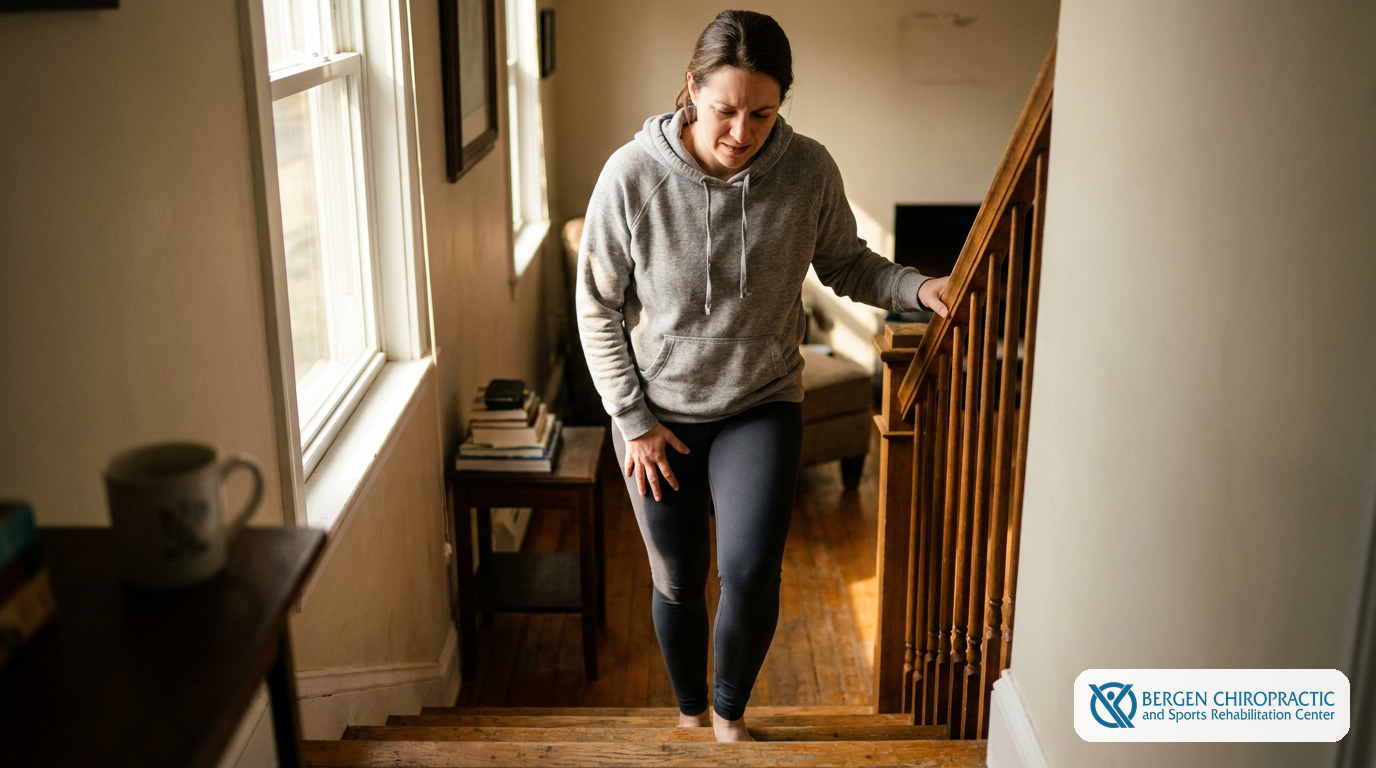
You crushed your workout yesterday. Today, sitting down feels like a negotiation, and the stairs are out of the question. Sound familiar?
That stiff, achy feeling that shows up a day or two after exercise is usually delayed onset muscle soreness, better known as DOMS. It’s one of the most common side effects of trying something new, increasing your intensity, or returning to training after a break.
Most of the time, DOMS is simply your body adapting. But some post-workout pain means your body needs help. Knowing the difference can save you from weeks on the sidelines.
What Is Delayed Onset Muscle Soreness (DOMS)?
DOMS is the muscle soreness and stiffness that develops after unfamiliar or more demanding exercise. It’s especially common after movements where your muscles lengthen under load, like lowering into a squat, running downhill, or slowly lowering a weight.
These movements create small amounts of stress in the muscle fibers. As your body responds and repairs that tissue, you may feel tenderness, tightness, and reduced flexibility. Over time, your muscles adapt, which is why the same workout usually feels easier the second or third time around.
DOMS can affect anyone, from first-time gym-goers to seasoned athletes. If you’ve just started a new class, added extra miles, or tried a heavier lifting program, it’s a normal part of the process.

DOMS vs. Injury: How Can You Tell the Difference?
Soreness and injury can feel similar at first, but they tend to behave quite differently. Paying attention to these four clues can help you tell them apart.
When the Pain Starts
DOMS usually appears 12 to 24 hours after exercise. You often feel fine leaving the gym, then wake up stiff the next morning. Pain that starts suddenly during a workout, especially with a pop, pull, or sharp twinge, is more likely to signal an injury such as a pulled muscle.
How Long the Soreness Lasts
DOMS typically peaks within one to three days and gradually fades. If your pain is getting worse instead of better, or it’s still hanging around after a week, something else may be going on.
Muscle Tenderness vs. Sharp or Localized Pain
DOMS tends to feel like a dull, widespread ache across the muscles you worked. An injury is more likely to feel sharp, stabbing, or concentrated in one specific spot. Pain around a joint, rather than in the muscle itself, also deserves a closer look.
Changes in Strength or Movement
With DOMS, your muscles may feel stiff and tired, but they still work. If you notice real weakness, swelling, bruising, or trouble bearing weight or moving a joint through its normal range, it’s time to stop guessing and get assessed.
How Long Should DOMS Last After a Workout?
For most people, DOMS peaks somewhere between 24 and 72 hours after exercise, then gradually eases. Mild soreness often clears within a few days, while a particularly challenging session can leave you feeling it for up to about a week.
How long it lasts depends on how new the activity was, how hard you pushed, and how well you recover afterward. Sleep, hydration, nutrition, and gentle movement can all play a role in how quickly you bounce back.
The key pattern to look for is steady improvement. Each day should feel a little better than the last. If that’s not happening, your soreness may not be DOMS.
When Should Post-Workout Pain Be Evaluated?
Consider getting your pain checked if:
- It’s sharp, stabbing, or limited to one specific area.
- It began suddenly during exercise.
- It keeps getting worse, or isn’t improving after a week.
- It comes with swelling, bruising, or noticeable weakness.
- It affects a joint or changes how you walk, lift, or move.
- It keeps coming back every time you return to training.
Seek medical care right away if extreme muscle pain comes with significant swelling, unusual weakness, or dark, tea-colored urine. These can be signs of a serious condition that needs urgent attention.
How Can Chiropractic Care Support Workout Recovery?
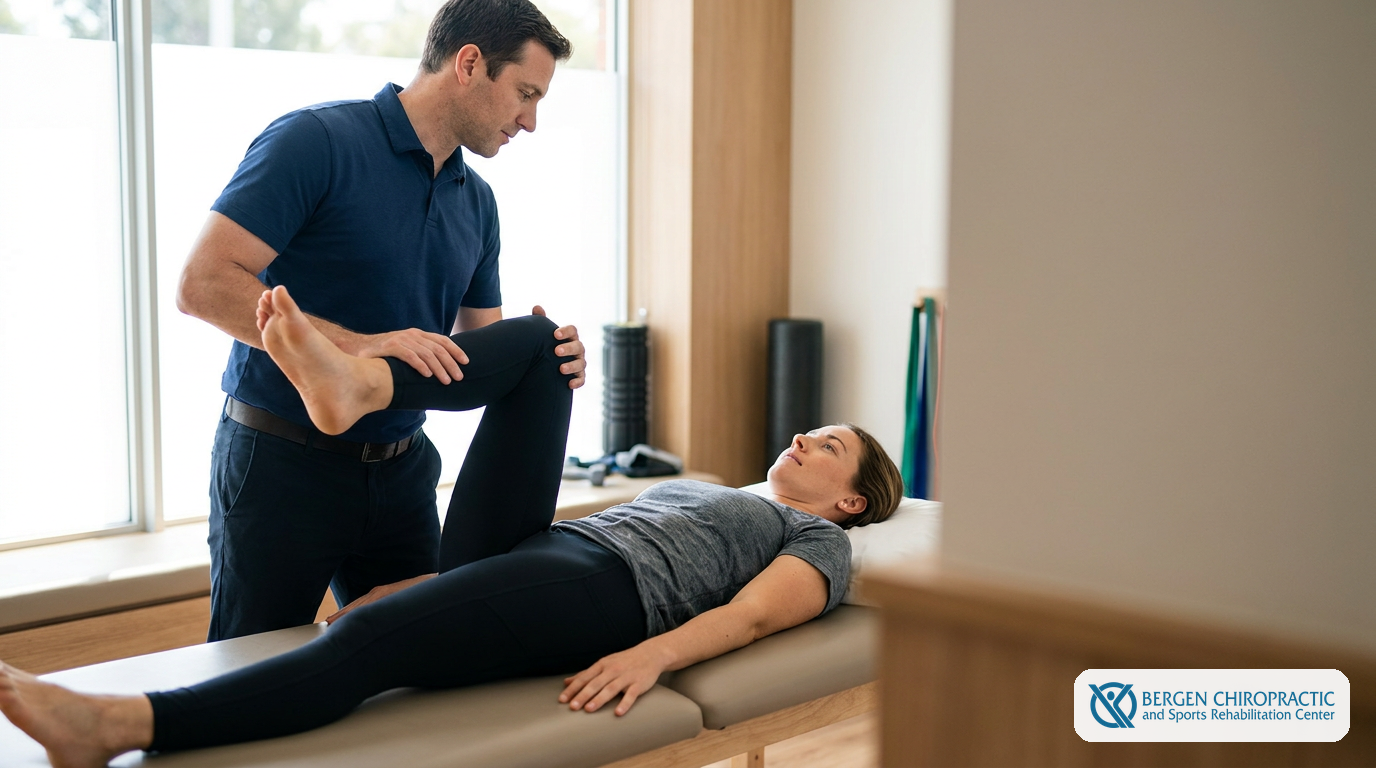
At Bergen Chiropractic and Sports Rehabilitation Center, we work with everyone from weekend warriors to competitive athletes. Our goal isn’t to stop you from training. It’s to figure out what your body needs so you can keep training with confidence.
Assessing Movement and Mobility
We start by understanding your symptoms, your training, and what changed before the pain began. From there, we assess how your joints and muscles are moving, looking for stiffness, imbalances, or movement patterns that may be overloading certain areas. Recurring soreness in the same spot, like the outer knee with IT band syndrome, is often a clue worth investigating.
Soft Tissue Therapy
When muscle tension or restricted tissue is part of the picture, our soft tissue techniques, including Graston Technique, Active Release Technique, and FAKTR, can help improve how your muscles and connective tissues move. For athletes recovering from intense training blocks, our sports recovery treatment options, such as NormaTec compression, can also be part of a broader recovery plan.
Rehabilitation Exercises
If an injury is slowing you down, rest alone usually isn’t enough. We’ll guide you through targeted mobility and strengthening exercises designed to rebuild capacity, so the injured area can handle the demands of your workouts again.
Guidance for Returning to Exercise Safely
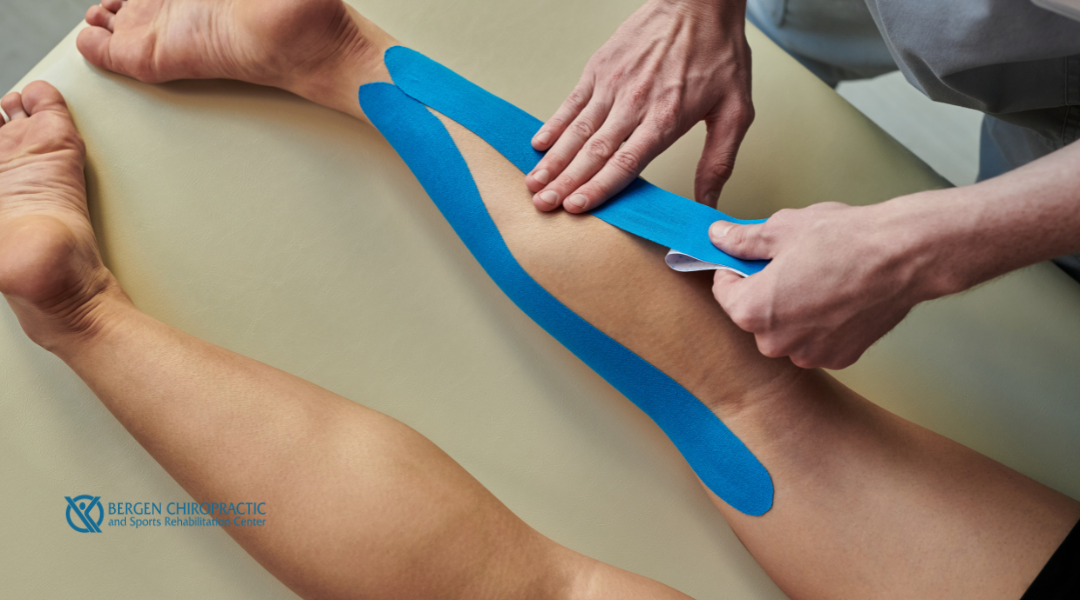
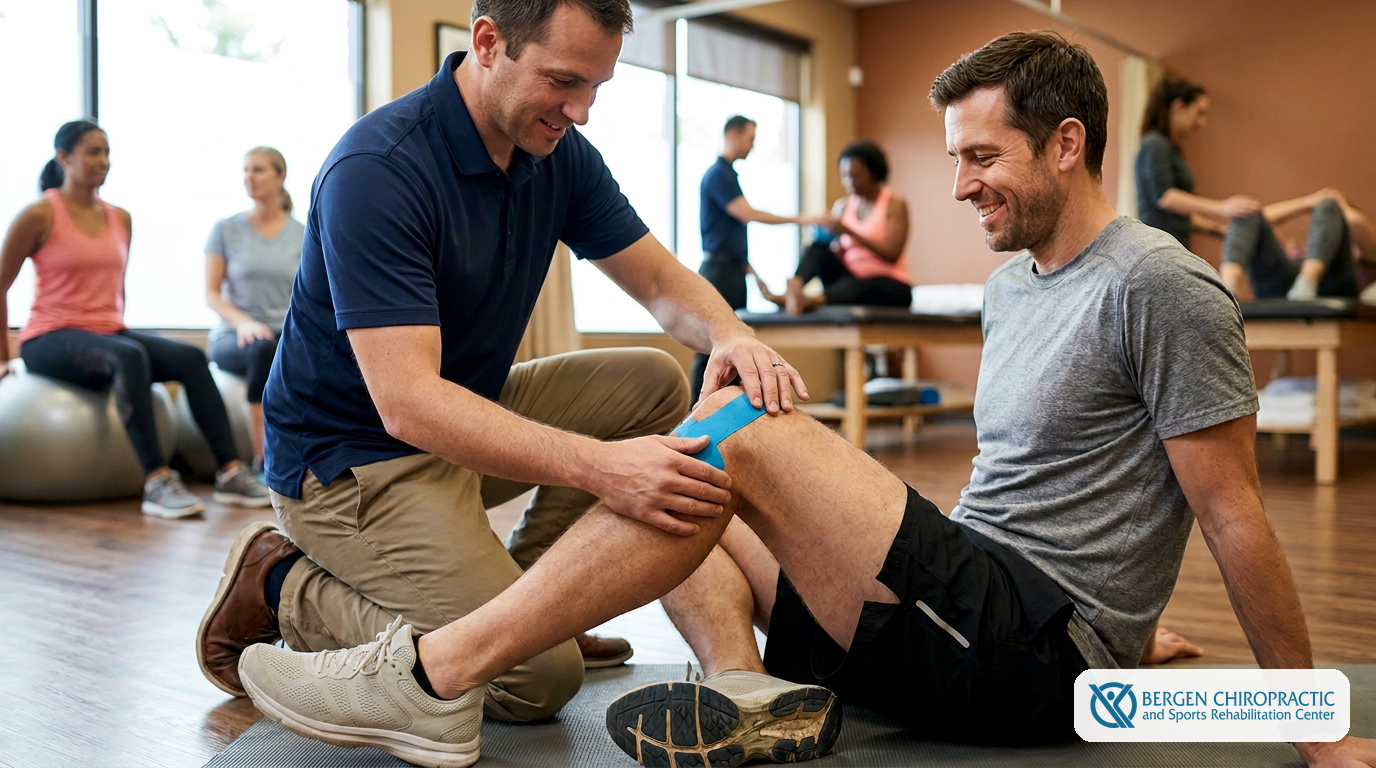
Coming back too fast is one of the most common reasons injuries linger. We’ll help you plan a gradual return that matches your recovery, and where extra support is helpful, kinesiology taping can offer flexible support without limiting your movement. Our athletic injury treatment approach is built around getting you back to the activities you love, safely.
DOMS and Workout Recovery FAQs
Should you exercise when you have DOMS?
In most cases, light activity is fine and may even help you feel less stiff. Walking, easy cycling, or gentle mobility work can keep blood flowing without placing heavy demands on sore muscles. It’s a good idea to avoid another intense session for the same muscle group until the soreness eases. If movement causes sharp pain, stop and get it checked.
Can DOMS last longer than three days?
Yes. While DOMS often peaks within three days, soreness after a very challenging or unfamiliar workout can last up to about a week. What matters most is that it keeps improving. Pain that worsens, lingers beyond a week, or comes with swelling or weakness may point to an injury rather than normal soreness.
Does massage help with DOMS?
Massage may help reduce the feeling of soreness and stiffness for some people, and many athletes find it a helpful part of their recovery routine. It won’t erase DOMS overnight, but combined with sleep, hydration, and light movement, it can help you feel more comfortable while your muscles adapt.
Don’t Let Persistent Pain Disrupt Your Training
The chiropractic team at Bergen Chiropractic and Sports Rehabilitation Center adheres to the highest medical standards to provide superior chiropractic care.
Our mission is to deliver unparalleled patient care in a comfortable and healing environment.
Access our contact form or call us at (201) 357-6539 to learn more about our chiropractic care services! Our offices at 532 Anderson Avenue, Cliffside Park, NJ 07010, and 62 Summit Ave, Hackensack, NJ 07601, are ready to welcome you as we proudly serve the areas of New York, New Jersey, Philadelphia, PA, and Baltimore, MD. Also, access our blog, Facebook, and Instagram pages for more information on chiropractic care!