Maybe it starts as a faint tingle after a long drive. Maybe your foot “falls asleep” every time you sit at your desk, or you’ve noticed a strange, dull patch along your thigh that won’t go away.
Leg numbness is one of those symptoms that’s easy to brush off, until it keeps coming back. While temporary numbness from sitting awkwardly is usually harmless, recurring or lingering numbness is often a sign that a nerve somewhere along the way is being irritated.
The encouraging part is that many common causes are musculoskeletal, which means they involve your spine, muscles, and joints. Understanding where the problem starts is the first step toward feeling normal again.
Some causes of numbness need urgent care. Call 911 if numbness comes on suddenly, especially on one side of the body or with facial drooping, slurred speech, or confusion. Seek emergency care if leg numbness comes with bladder or bowel changes, numbness around the groin, or rapidly worsening leg weakness.
6 Common Causes of Leg Numbness
1. Sciatica
Sciatica describes pain, tingling, or numbness that travels along the sciatic nerve, which runs from your lower back through the buttock and down the back of each leg. It’s a symptom rather than a diagnosis, meaning something is irritating that nerve along its path.
People often describe it as a burning or electric sensation, though some feel more numbness than pain. If you’ve already explored sciatica pain relief through chiropractic care, you’ll know that finding the source matters more than chasing the symptom.
2. Pinched or Irritated Nerves
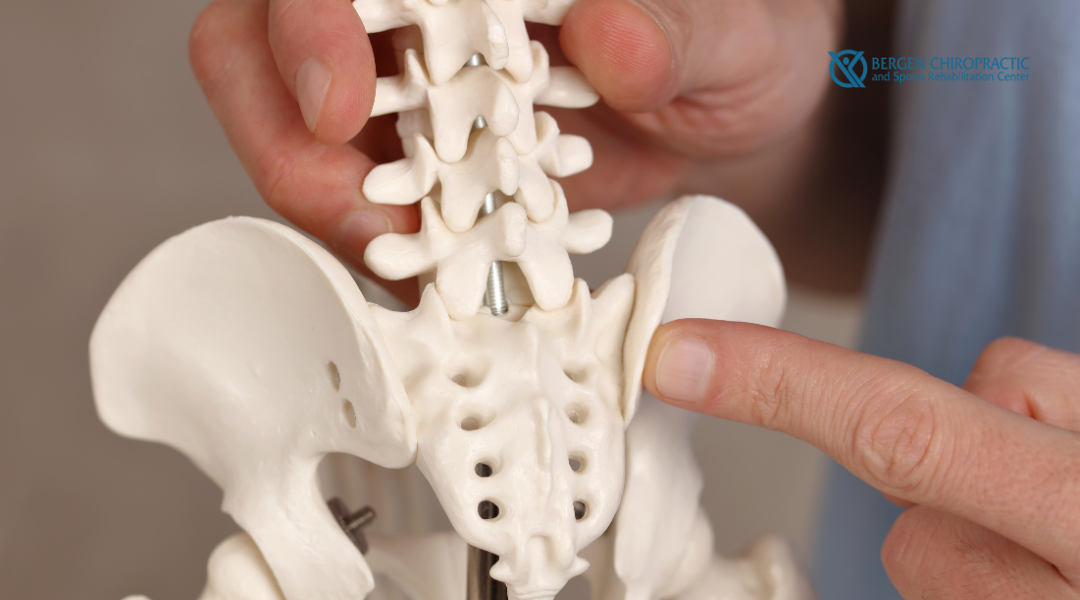
Nerves exit your spine through small openings between the vertebrae. When surrounding tissues swell, stiffen, or narrow that space, a nerve root can become compressed or irritated.
The location of your numbness often offers a clue. Numbness on the outer calf, the top of the foot, or the front of the thigh may point to different nerve roots, which helps guide a proper assessment.
3. Herniated or Bulging Discs
The discs between your vertebrae act as cushions. When a disc bulges or herniates, it can press on a nearby nerve and cause numbness, tingling, or weakness down the leg.
Disc problems are commonly linked to repetitive bending, heavy lifting, or long periods of sitting. They’re also one of the most frequent reasons people develop sciatica symptoms.
4. Piriformis Syndrome
The piriformis is a small muscle deep in the buttock that sits right next to the sciatic nerve. In some people, the nerve even runs through it. When the muscle tightens or becomes irritated, it can create symptoms that closely mimic sciatica.
Piriformis syndrome often causes a deep buttock ache that worsens with sitting, climbing stairs, or running, sometimes with numbness traveling down the back of the thigh.
5. Prolonged Sitting or Poor Positioning
Crossing your legs, sitting on a wallet, perching on the edge of a hard chair, or staying in one position for hours can all put pressure on nerves in the hips and legs.
This type of numbness often eases once you stand up and move. If it happens regularly, it may be a sign that your sitting habits are aggravating an underlying issue, much like the patterns behind lower back pain when sitting.
6. Spinal or Joint Mobility Issues
When the joints in your lower back, pelvis, or hips aren’t moving well, surrounding muscles and nerves may take on extra strain. Over time, that can contribute to irritation and sciatica-like symptoms.
Restricted hip movement in particular is a common and often overlooked contributor, which is why our hip pain treatment looks at how your hips, pelvis, and lower back work together.
How Does a Chiropractor Assess Leg Numbness?
At Bergen Chiropractic and Sports Rehabilitation Center, we never assume that numbness is coming from one place. Our assessment is designed to narrow down the likely source before any treatment begins.
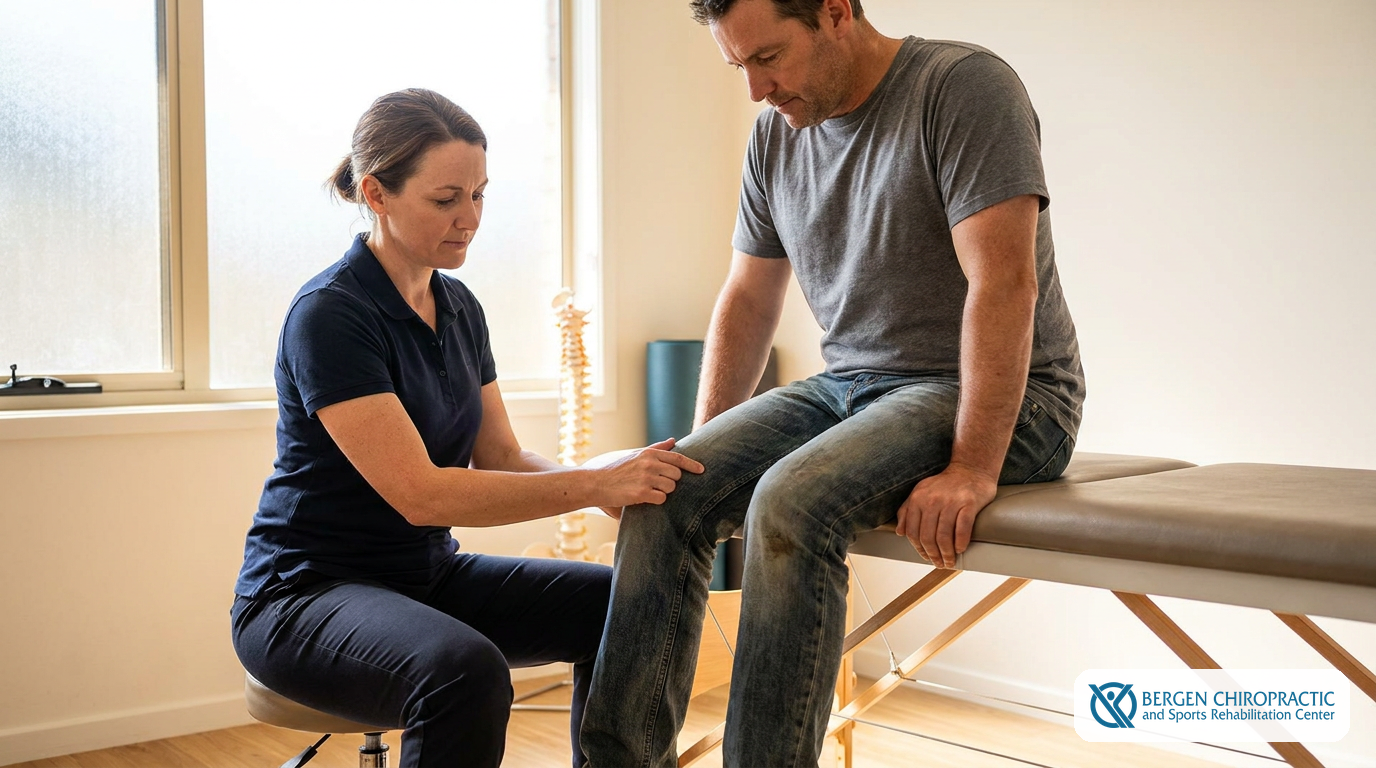
We’ll start by asking when your numbness began, where you feel it, what makes it better or worse, and whether you’ve noticed pain, weakness, or changes in balance. From there, we’ll assess your spinal and hip mobility, check your strength, reflexes, and sensation, and use movement tests to see how your nerves respond.
Not every cause of leg numbness is musculoskeletal. Conditions like diabetes, circulation problems, and vitamin deficiencies can also affect your nerves. If your symptoms suggest something outside our scope, we’ll refer you to the appropriate provider.
Chiropractic Care Helps With Leg Numbness
Once we have a clearer picture of what’s driving your symptoms, we’ll build a treatment plan around your needs.
Chiropractic Adjustments
When restricted joints in the lower back or pelvis are contributing to nerve irritation, adjustments or gentle mobilization may help restore movement. We’ll always discuss whether these are suitable for you, especially if a disc injury is involved.
Soft Tissue Techniques
Tight muscles around the lower back, hips, and buttocks can add pressure to irritated nerves. Our soft tissue techniques, including Graston Technique, Active Release Technique, and FAKTR, are designed to ease muscle tension and help tissues move more freely.
Mobility and Rehabilitation Exercises
Targeted exercises can help improve spinal and hip mobility, support the muscles around the lower back, and reduce sensitivity in irritated nerves. Your program will be matched to your symptoms and progressed as you improve.
Addressing Contributing Movement Patterns
Treatment works best when it also addresses what caused the problem in the first place. We’ll look at how you sit, lift, train, and move throughout the day, then help you make practical changes that reduce strain and lower the chance of your symptoms returning.
Leg Numbness FAQs
Why does my leg go numb when sitting?
Sitting can compress nerves in the buttock and thigh, especially if you cross your legs, sit on a wallet, or stay in one position for long periods. If numbness happens often or lingers after standing, an irritated nerve, disc problem, or tight piriformis muscle may be contributing.
Can sciatica cause numbness without pain?
Yes. Some people with sciatica feel numbness, tingling, or a pins-and-needles sensation without significant pain. Because numbness can also signal ongoing nerve irritation, it’s worth having it assessed rather than waiting for pain to appear.
Can a chiropractor help with numbness and tingling?
A chiropractor can help when numbness and tingling are linked to musculoskeletal causes, such as joint restrictions, muscle tension, or nerve irritation from the lower back or hips. Care starts with an assessment to determine whether chiropractic treatment is appropriate or if a referral is needed.

Find Out What’s Causing Your Leg Numbness at Bergen Chiropractic!
The chiropractic team at Bergen Chiropractic and Sports Rehabilitation Center adheres to the highest medical standards to provide superior chiropractic care.
Our mission is to deliver unparalleled patient care in a comfortable and healing environment.
Access our contact form or call us at (201) 357-6539 to learn more about our chiropractic care services! Our offices at 532 Anderson Avenue, Cliffside Park, NJ 07010, and 62 Summit Ave, Hackensack, NJ 07601, are ready to welcome you as we proudly serve the areas of New York, New Jersey, Philadelphia, PA, and Baltimore, MD. Also, access our blog, Facebook, and Instagram pages for more information on chiropractic care!